Table of Contents
ToggleA well-designed patio furniture set with a corner table can completely transform how you use your outdoor space. Instead of cramped seating around a distant drinks table, corner table sets bring everything within arm’s reach, conversation, meals, and cold beverages all centered around a smart layout. Homeowners are ditching mismatched collections and opting for cohesive patio furniture sets with corner tables that blend functionality with style. Whether you’re planning intimate gatherings or casual family dinners, these modular sets offer flexibility that traditional rectangular tables simply can’t match. Let’s walk through what makes them work, how to pick the right one, and how to keep it looking sharp for years.
Key Takeaways
- Corner table patio furniture sets maximize conversation, sightlines, and functionality by anchoring outdoor seating in an efficient L- or U-shaped layout that keeps beverages and meals within arm’s reach.
- Aluminum frames offer lightweight durability and rust resistance ideal for humid climates, while teak and hardwoods develop beautiful patinas and last 15+ years, though wood requires occasional sealing.
- A standard corner sectional requires a minimum 10×10 footprint paired with a 24–36 inch corner table, so measuring your patio and planning 3–4 feet of walking space prevents a cramped, claustrophobic feel.
- Mid-range patio furniture sets ($1,500–$3,500) offer the best value, providing superior hardware, thicker cushioning, and 5–8 years of durability without premium five-figure costs.
- UV-stabilized, marine-grade cushion fabrics like Sunbrella resist fading and outlast standard materials by years, making them worth the upfront investment for season-spanning outdoor use.
- Regular maintenance—brushing cushions monthly, inspecting bolts, and resealing wood every 2–3 years—keeps your corner table set looking sharp and prevents safety issues from loose hardware or weather damage.
Why Corner Table Patio Sets Are Game-Changers for Modern Outdoor Living
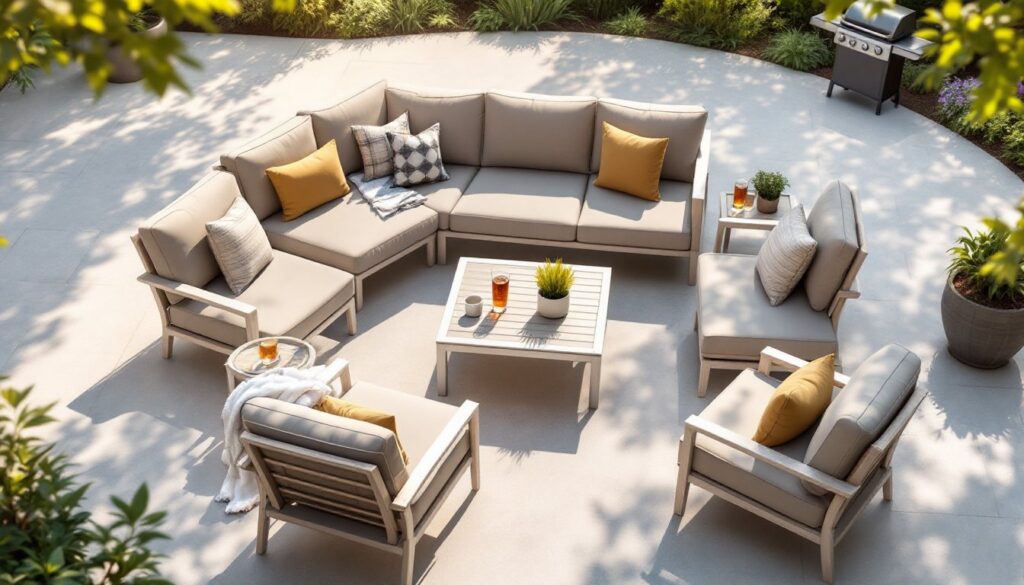
Corner table patio sets solve a real problem: how do you arrange outdoor seating so everyone’s in the conversation and drinks don’t go flying? A corner table anchors the setup, letting you position multiple lounge chairs in an L-shape or U-shape facing inward. This arrangement maximizes sightlines and creates a natural gathering point.
These sets are modular, which matters. You can buy a base set and add individual pieces later as your needs shift or your budget allows. Unlike fixed furniture, corner tables with attached seating give you breathing room, literally. An L-shaped configuration uses corner space efficiently, leaving room for grills, planters, or foot traffic. For smaller patios, this matters.
They’re also conversation-friendly. When everyone sits facing the corner table instead of scattered around, people actually engage. Add a fire table option, and suddenly your patio becomes the place where neighbors linger past sunset. That’s the game-changer angle: form follows function, and function here is connection.
Key Material Options and Durability Considerations
Material choice determines how often you’ll be replacing your set. Aluminum frames are lightweight, rust-resistant, and ideal for humid climates. They won’t splinter or rot, and you won’t need a forklift to rearrange them. The trade-off: aluminum transmits heat, so frames can get uncomfortably hot in direct sun without cushions.
Teak and other hardwoods age beautifully, developing a silvery patina over time. They’re naturally rot-resistant and dense enough to handle UV exposure. Cost is steep upfront, but teak lasts 15+ years with minimal intervention. If appearance matters as much as durability, wood is your answer, though it does require occasional sealing.
Wicker or rattan over aluminum frames offers that resort aesthetic. The synthetic versions (not natural wicker) resist moisture and won’t fray in rain or sun. They’re soft underfoot and look inviting, but they can fade and may show wear faster than wood or pure aluminum. Cushions are almost mandatory here, and they’ll need seasonal storage in harsh climates. According to Aluminium Outdoor Furniture: The Perfect Choice For Your Patio, aluminum is your move if durability and low maintenance top your list.
Check for UV-stabilized fabrics if cushions are included. Standard fabric fades within a season: marine-grade or solution-dyed synthetics hold color for years. Don’t cheap out on cushion covers, outdoor-rated materials like Sunbrella cost more but actually last.
Sizing and Layout: Choosing the Perfect Set for Your Space
Measure your patio before shopping. A standard corner sectional runs 8–10 feet on each arm: paired with a corner table (usually 24–36 inches square), you’re looking at a 10×10 minimum footprint. If your patio is 8×8, you’ll need a scaled-down set or single chaise configuration.
Consider traffic flow. You need clearance behind seating for people to move without tripping, and gap space between furniture and patio edges. A packed patio looks cramped and feels claustrophobic. Aim for 3–4 feet of walking space if possible.
Corner tables come in a few common sizes. A 24-inch square table works for 4–6 people and tight spaces. 30-inch tables feel more generous and accommodate 6–8. Tables at 36 inches square or larger are best for dedicated dining areas where the table is the star. Height matters too, most are 16–18 inches high (side table height) rather than standard dining height (30 inches), so they work as both drinks tables and informal dining.
If you’re torn between sizes, Outdoor Furniture Tables: A Complete Guide breaks down configurations and spatial planning in detail. Sketch your patio layout on graph paper and overlay furniture templates to visualize the final result.
Design Styles That Complement Any Home Aesthetic
Modern minimalist patios lean toward clean lines, low-profile furniture, and natural materials. Sleek aluminum frames with thin-profile cushions, paired with concrete or gravel textures, fit this vibe. Skip ornate details: let geometry do the talking.
Transitional design (somewhere between farmhouse and contemporary) embraces mixed materials. Think wicker on an aluminum frame with wood side tables and neutral cushions. It’s approachable and forgiving, imperfection is part of the charm. This style dominates because it works with most homes without major investment in decor coordination.
Traditional or Mediterranean aesthetics favor wrought iron, teak, or heavy wicker. Larger cushions, warmer tones, and decorative touches fit here. Add a terracotta side table or stone accents, and you’ve got a cohesive look. Design inspiration platforms like Houzz are goldmines for seeing how others have styled similar sets in their spaces.
Rustic and coastal styles welcome weathered wood, driftwood-toned frames, and oversized cushions. Lighter color palettes (whites, grays, sand tones) keep things airy. A low corner table in whitewashed wood anchors the vibe without visual weight.
The smartest move: pick a style direction, then find a furniture set that genuinely fits it rather than forcing a piece into a space where it looks out of place. Your corner table set will be outside all season: it should make you happy when you see it.
Setup and Maintenance Tips for Long-Lasting Outdoor Furniture
Assembly varies wildly depending on what you buy. Some corner tables arrive fully assembled: others require bolting frames together. Budget 2–4 hours if you’re not handy, and grab a helper, corner sections are awkward to flip and orient alone. Lay all parts out and group hardware before you start: it saves frustration.
Place furniture on a level surface. Even slight slopes cause wobbling and put stress on joints. If your patio slopes, shim the legs with composite shims (not wood, it rots) until everything sits evenly. This is not cosmetic: unlevel furniture fails faster.
Seasonal care depends on climate. In moderate zones, brush cushions monthly and hose down frames twice a year. In harsh climates, store cushions indoors during off-season. Leave frames out if they’re rated for freezing: compressing cushion fibers while damp invites mildew. For wood, apply sealant every 2–3 years if you want to maintain rich color: skip it if you’re okay with silver patina.
UV exposure fades everything. Use furniture covers or move pieces to shade when not in use for extended periods. Covers trap moisture (bad), so ensure good airflow underneath. Many experienced DIYers skip covers and instead reposition furniture quarterly or store loose cushions inside.
Inspect regularly for loose bolts, cracked welds (on metal), or splintering (on wood). Tighten hardware before problems escalate into safety issues. Pressure washing is tempting but risky, high pressure can gouge wood, fray wicker, or force water into joinery. Use a soft brush and mild soap instead.
Finding the Right Budget-Friendly Set Without Sacrificing Quality
Price ranges vary wildly. Budget sets ($800–$1,500) often pair aluminum frames with basic synthetic wicker and thin cushions. They’re functional, but materials feel lightweight and finishes may fade within 2–3 seasons. Mid-range sets ($1,500–$3,500) offer better hardware, thicker cushioning, and hardier frame construction. This is where most homeowners find the sweet spot, good durability without five-figure investment.
Premium sets ($3,500+) justify cost through superior materials (teak, marine-grade cushions, commercial-grade hardware), warranty depth, and design refinement. But premium isn’t always necessary for your use case.
Where you buy matters. Big-box retailers like Home Depot Patio Furniture stock solid mid-range options with return policies and local delivery. Online specialists often have wider selection but require shipping logistics planning. Showroom shopping lets you touch fabric and test seat comfort, something reviews can’t replicate.
Look for sets bundled with cushions and a cover as package deals: separates cost more. Check warranty terms, reputable brands offer 2–3 year coverage on frames and seams. Avoid the temptation to buy the absolute cheapest option: you’ll replace it within a few years. Mid-range furniture lasts 5–8 years with care, and Design Milk regularly reviews contemporary options that balance aesthetics and longevity. Spending $2,000 once beats $800 every couple of seasons.
Conclusion
Patio furniture sets with corner tables aren’t luxury items, they’re smart outdoor living solutions. They encourage gathering, maximize space, and anchor a cohesive aesthetic. Pick durable materials, measure carefully, and invest in mid-range quality over bottom-barrel bargains. Setup takes patience, and maintenance is minimal if you’re thoughtful upfront. Your outdoor space is an extension of your home: furnish it like you’ll actually use it, because you will.