Table of Contents
ToggleA well-arranged patio is the difference between a backyard that looks like a discount furniture warehouse and one that actually invites you to sit down, relax, and stay awhile. Patio furniture layout isn’t rocket science, but it does require a little planning. You need to balance function with aesthetics, consider traffic patterns, and make intentional choices about what goes where. Whether you’re working with a tiny balcony or a sprawling deck, the same principles apply: assess your space, create defined zones, choose pieces that fit the scale, and arrange them thoughtfully. This guide walks you through the process step by step, so you can design a patio that’s both beautiful and actually usable.
Key Takeaways
- Successful patio furniture layout requires measuring your space, sketching an overhead view, and assessing fixed elements before moving any pieces.
- Create distinct zones for different activities—such as dining, lounging, and reading—to make your patio feel intentional and prevent overcrowding.
- Leave clear walking paths of at least 24 to 36 inches wide between furniture clusters to maintain traffic flow and prevent the space from feeling cramped.
- Match furniture scale to your patio size, aiming for pieces that occupy roughly 50-60% of the space while balancing visual weight across the layout.
- Position your largest piece—such as a sofa or dining table—as an anchor that faces something appealing, then build the rest of your patio furniture arrangement around it.
- Test your layout by actually using the furniture for an evening or weekend to reveal comfort issues, lighting problems, and wind patterns before making final adjustments.
Assess Your Patio Space and Style
Before you move a single chair, measure your patio carefully and take an honest look at its shape, size, and existing features. Use a tape measure to get the full dimensions, then sketch a rough overhead view on graph paper (or use a free online tool like Floorplanner). Note fixed elements, doorways, stairs, pergolas, grills, planters, because these won’t be moving and they’ll shape everything else.
Next, identify the style or vibe you’re after. Are you building a modern minimalist retreat, a cozy dining setup, or a casual lounge area? This isn’t about following trends: it’s about matching your furniture choices and arrangement to how you actually want to use the space. A Mediterranean villa aesthetic calls for a different arrangement than a modern Scandinavian layout.
Consider sunlight and wind patterns too. If your patio bakes in afternoon sun, you may want shade structures (pergolas, umbrellas, or shade sails) and seating that doesn’t require hours of direct exposure. Wind direction matters for comfort and for keeping lightweight pieces from blowing around. Material durability also ties into this, if your patio gets salt spray, harsh winters, or intense UV exposure, aluminium outdoor furniture tends to hold up better than unfinished wood or certain metals.
Create Zones for Different Activities
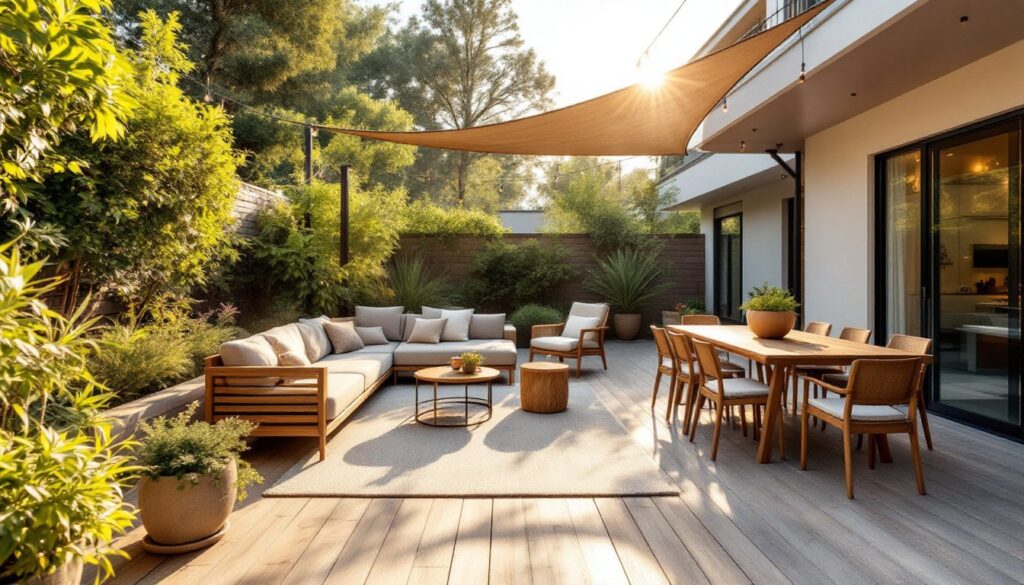
The best patios work like rooms, they’re divided into zones, each with its own purpose. You might have a dining zone, a lounging zone, and maybe a reading nook or game area. This separation makes the space feel more intentional and helps you avoid cramming everything together.
Start by deciding what you actually want to do on your patio. If you’ll be eating outdoors, a dining table and chairs get top billing. If you prefer relaxing, invest in a good sofa or sectional and side tables. Some people want both, and that’s fine, just keep them physically distinct. Outdoor furniture tables anchor dining zones, while seating clusters anchored by a coffee table create lounge areas.
Use visual elements to reinforce zones: a pergola overhead, a rug, or a change in paving material can all signal “this is the dining area” or “this is where we lounge.” These don’t have to be expensive, even arranging furniture in a tight cluster rather than spreading it out signals a cohesive zone.
Traffic Flow and Accessibility
Whether you realize it or not, people move across your patio in predictable patterns. They enter from the house, they might walk to a grill or fire pit, they move to seating areas. Leave clear walking paths, at least 24 to 36 inches wide, between furniture clusters and from entry points to the main seating areas. Nothing kills a patio faster than having to squeeze past a coffee table or vault over an ottoman just to get a drink.
If you have outdoor stairs, a slope, or a grill, keep the path clear and direct. Obstacles create congestion and, frankly, make the space feel smaller. Test your layout by walking through it before you commit to an arrangement.
Balance and Proportion in Furniture Selection
Proportion is about matching furniture scale to your patio size. A massive sectional that costs $3,000 looks ridiculous on a 10-by-12-foot patio, but it’s perfect for a sprawling 30-by-40-foot space. A good rule of thumb: furniture should occupy roughly 50-60% of your patio. That leaves room to move without feeling barren.
When selecting pieces, think about visual weight too. A low, solid sofa feels heavier than delicate chairs. A thick table dominates more than a glass-topped one. Balance heavy and light elements across the space, don’t cluster all the substantial pieces on one side.
Consider sight lines. If your patio is visible from inside the house, what’s the first thing you see? Arrange key pieces to draw the eye somewhere pleasant: a view, a focal point like a fire pit, or a statement piece. At Home Depot, you’ll find options across price points and styles, but choose based on your space’s needs, not just what’s on sale.
Materialwise, mix textures to keep things visually interesting: woven rattan with metal, wood with glass, upholstered cushions with natural teak. Just make sure materials match your climate and maintenance tolerance. Teak and cedar age beautifully but need occasional oiling: metal and synthetic rattan are low-maintenance but can heat up in the sun.
Positioning Key Pieces for Maximum Impact
Your largest or most expensive piece, usually a sofa, sectional, or dining table, anchors the zone. Position this first, then build around it. For a lounge area, the sofa or seating cluster should face something appealing: a garden view, a fire pit, or the house (if the view inside is pleasant). Avoid pointing furniture at a garage wall or directly into the afternoon sun.
Dining tables work best on a relatively flat, level spot with good access from the house. You’ll want seating on all sides, but not crammed so tightly that people can’t push chairs back. Allow about 36 inches of clearance around the table so diners can move comfortably.
Side tables and coffee tables aren’t just decorative, they’re working surfaces. Position them at arm’s reach from seating, not in the middle of a traffic path. If your patio connects multiple zones, avoid placing accent pieces where they’ll trip people walking between areas. Home Depot Outdoor Furniture options span end tables, nesting tables, and consoles: pick styles that echo your main pieces for cohesion.
Accessories like planters, lanterns, and umbrellas fill gaps but shouldn’t clutter the space. Group them intentionally, a cluster of three planters at varied heights looks curated: scattered singles look accidental. Hang an umbrella or install a shade sail behind seating to create a sense of enclosure and define the zone further.
Finishing Touches and Practical Tips
Layered lighting transforms a patio from unusable after sunset to genuinely inviting. String lights, lanterns, or uplighting add ambiance without very costly. Cushions and throw pillows add comfort and tie colors together, pick UV-resistant fabrics if your patio gets full sun, and store them when they’re not in use to extend their life.
Rugs anchor a seating area and add warmth underfoot. Choose outdoor-rated rugs that won’t rot or fade, and size them so at least the front legs of your seating pieces rest on them. A 5-by-8-foot rug works well for a standard lounge cluster: scale up or down based on your space.
Plants bring life and softness. Position larger potted plants (planters with 18+ inch diameters) at the perimeter or in corners to frame the space without blocking sightlines. Smaller plants and herbs can sit on side tables or shelves. They add visual interest and softness without eating into your conversation zone.
Before finalizing your layout, sit in it. Actually use the furniture for an evening or weekend. Are you comfortable? Can you see and talk to people in other zones? Is there glare from sun or light? Does wind whip through? A few hours of real use will reveal issues that sketches never do. After that test run, you can adjust, move a chair a few feet, reposition an umbrella, or add a screen if wind is brutal. Southern Living and other design publications often feature patio setups that inspire real solutions, not just Pinterest fantasies.
Conclusion
A thoughtful patio layout starts with measuring your space, understanding your style, and arranging furniture in distinct zones with clear traffic flow. Balance proportion and materials, anchor zones with key pieces, and refine with lighting, textiles, and plants. The goal isn’t perfection, it’s creating a patio you’ll actually want to use. Take time to assess, arrange, test it out, and adjust. Your future self will thank you every time you step outside.