Table of Contents
ToggleBuying patio furniture on a tight budget doesn’t mean settling for flimsy knockoffs or settling into mismatched pieces. Used PVC patio furniture offers homeowners a practical middle ground, durability, low maintenance, and genuine savings. Whether you’re furnishing a brand-new patio or refreshing last season’s setup, knowing where to shop and what to inspect separates a smart find from a money-wasting mistake. This guide walks you through sourcing quality used PVC pieces, evaluating them before purchase, and keeping them looking fresh for years to come.
Key Takeaways
- Used PVC patio furniture offers 40–60% savings compared to new sets while maintaining durability, weather resistance, and low-maintenance benefits that last a decade or more.
- Always inspect used PVC patio furniture in person, checking frame joints, cushions for mold, hardware corrosion, and structural cracks before purchasing to avoid costly mistakes.
- Top sources for finding quality used PVC patio furniture include Facebook Marketplace, Craigslist, consignment shops, seasonal clearance at big-box retailers, and local Buy Nothing groups.
- A simple maintenance routine—monthly wiping, breathable covers during storage, and annual hardware tightening—keeps secondhand PVC furniture looking fresh and safe for years.
- Lightweight PVC construction eliminates expensive delivery and installation fees, making it an even more budget-friendly alternative to heavier materials like concrete or wrought iron.
Why Choose Used PVC Patio Furniture
PVC (polyvinyl chloride) patio furniture has earned its reputation in outdoor settings. Unlike wood, it doesn’t rot or splinter: unlike metal, it resists rust and doesn’t corrode in salt-air environments. New PVC sets easily run $800–$3,500 for a modest four-person dining arrangement, but used pieces let you grab the same durability for 40–60% less.
Used PVC furniture also sidesteps the buyer’s remorse trap. You’re not gambling on whether a set will work in your space, someone else has already lived with it, so you’re buying a proven layout and style. Many sellers upgrade to different colors or styles after just a season or two, meaning secondhand PVC often sits in garages barely weathered.
One practical bonus: PVC is lightweight compared to concrete or wrought iron, so assembly and repositioning won’t require a second pair of hands or a moving truck. That translates to real savings on delivery and installation headaches.
Where to Shop for Used PVC Patio Furniture
Online Marketplaces and Resale Platforms
Facebook Marketplace and Craigslist remain the backbone of local used-furniture hunting. Search terms like “PVC patio furniture,” “outdoor dining set,” or “resin wicker” cast a wider net than just “used furniture.” Messenger lets you communicate directly with sellers, ask questions before committing, and negotiate in real time.
Specialty resale platforms like OfferUp and Letgo operate similarly but have grown harder to rely on as sellers migrate elsewhere. eBay works if you’re comfortable with shipping costs, which can rival or exceed the furniture’s price for multi-piece sets. Wayfair and Overstock also run clearance and outlet sections where scratch-and-dent PVC pieces sell at steep discounts, not quite secondhand, but effectively used at closeout prices.
Home Depot Outdoor Furniture sections often display floor samples or last-season stock at reduced prices, a middle ground between retail and resale. Online community groups dedicated to local selling (Nextdoor, Buy Nothing Facebook groups) have exploded in popularity and sometimes surface better deals because there’s no profit-seeking middleman.
Local Retail and Consignment Options
Consignment shops and secondhand home-goods stores (think Habitat for Humanity ReStore locations) sometimes stock patio furniture. Inventory rotates fast, but prices are typically 30–50% off retail, and staff often know the furniture’s condition history.
Seasons-end clearance at big-box retailers, Home Depot, Lowe’s, Costco, marks down outdoor furniture aggressively in late August and September. These aren’t used, but they’re as close to secondhand pricing as you’ll get on new stock. Home Depot Patio Furniture sections especially rotate inventory to make room for holiday seasonal items.
Local patio and garden shops sometimes accept trade-ins or have display models they discount. Building relationships with staff can alert you to incoming used inventory before it hits their website. Estate sales and auctions occasionally feature outdoor furniture bundles, often undervalued by auctioneers unfamiliar with outdoor gear.
What to Inspect Before Buying
Inspecting used patio furniture in person is non-negotiable. Never buy sight unseen without a trusted return policy. Here’s your checklist:
Frame and Joints: Run your hand along all welds, seams, and connection points. PVC pipe furniture relies on joint integrity: a cracked weld or loose connection can’t be safely repaired at home. Flex the frame gently, it shouldn’t move independently of where you’re pushing. Check corner braces: missing or corroded bolts must be replaced before use.
Cushions and Fabric: If cushions are included, inspect for mold, mildew, or water damage. Smell them, musty odors suggest they’ve been stored wet or in damp conditions. Mold on foam is expensive to fix (replacement cushions run $50–$150 each). Check seams for rotting thread or separation. UV damage shows as faded, brittle, or cracking fabric: sunfaded color is cosmetic, but cracking means the material’s structural integrity has failed.
Cracks and Splits: Small hairline cracks in PVC rarely spread, but deep splits or chunks missing from joints need assessment. PVC splinters are irritating and unsafe: you may refinish a cracked pipe with sandpaper and paint, but joint cracks typically require professional welding or joint replacement.
Rust and Corrosion: Stainless-steel hardware lasts longer, but even stainless bolts can corrode if left exposed. Replace visibly corroded fasteners before sitting down, rust is an injury risk and signals the furniture’s been neglected outdoors. Aluminium Outdoor Furniture uses aluminum frames similarly: check for white oxidation (corrosion) that suggests poor storage or exposure.
Paint and Finish: Peeling or chalky paint doesn’t affect function but looks worn. Plan a refinish if aesthetics matter to you (budget 4–8 hours and $30–$60 for primer and outdoor paint). Faded color alone is fine: it means the pieces have character.
Always ask the seller how long they’ve owned the set, whether it was stored indoors or outdoors, and if cushions or covers came with it originally. Their answers reveal care history.
Cleaning and Maintaining Your Used PVC Furniture
Once you’ve bought and brought home your used PVC set, a good cleaning restores appearance and extends life. Here’s a maintenance routine:
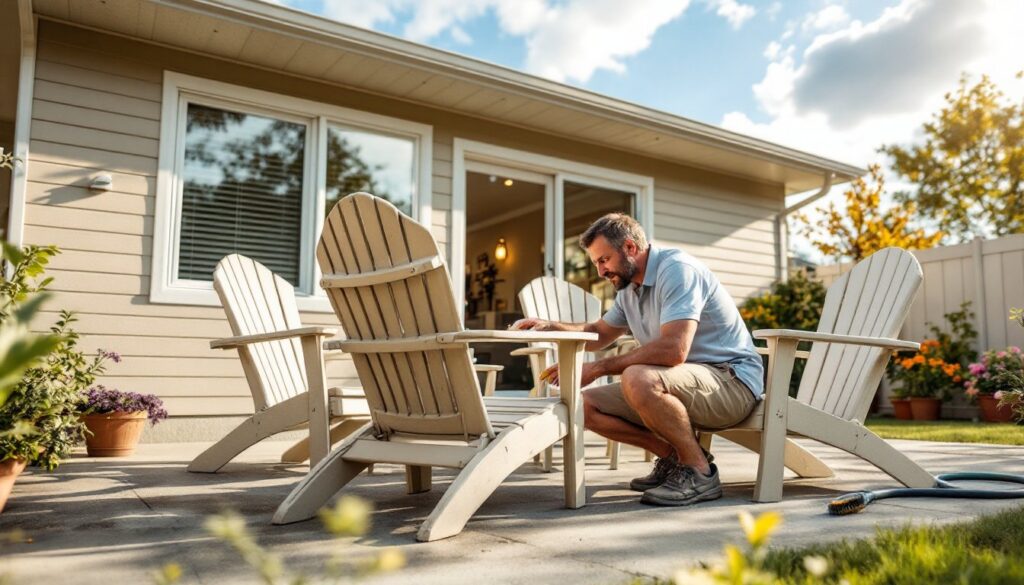
Initial Deep Clean: Mix warm water with a few drops of dish soap and a soft-bristled brush. Scrub the entire frame, paying attention to crevices where dirt and salt accumulate. Rinse thoroughly with clean water (a garden hose works fine). Let everything air-dry completely before using or covering.
For stubborn mildew on cushions or fabric, use a 1:1 solution of white vinegar and water. Spray, let sit for 15 minutes, scrub gently, and rinse. Avoid bleach on colored cushions, it fades fabric fast.
Ongoing Care: Wipe down the frame monthly during use season with a damp cloth. Cover the set with a breathable fitted cover when not in use for extended periods (fall/winter storage). Don’t use airtight plastic, trapped moisture breeds mold. Remove standing water from creases where seat backs meet frames.
Refinishing (if needed): If paint is peeling, sand lightly with 120-grit sandpaper, wipe dust away, apply a coat of exterior primer, and finish with two coats of outdoor furniture paint (acrylic latex or oil-based). Sand between coats for best adhesion. Use painter’s tape to protect cushions or hardware you don’t want to paint.
Tightening Hardware: Every spring, walk around with an adjustable wrench or socket set and tighten bolts, rivets, and connection points. Vibration from use and temperature swings loosen fasteners over time. You’ll catch wobbles or loose arms before they become safety hazards.
Proper maintenance keeps secondhand PVC looking respectable and performing safely for a decade or more. Creative storage and seasonal prep beat costly repairs or replacement every few years.
Sites like Gardenista showcase seasonal outdoor spaces and offer inspiration for styling your refreshed patio setup alongside new PVC pieces you’ve sourced.
Conclusion
Used PVC patio furniture is a smart play for budget-conscious homeowners who value durability and low upkeep. Know where to shop (Facebook Marketplace, consignment stores, seasonal clearance), what to inspect (frames, cushions, hardware), and how to maintain what you buy. A careful search and basic cleanup can land you a functional, weather-resistant patio set for half the retail price, and you’ll spend your savings on a paint refresh or new cushions instead of replacing the whole setup in a few years.