Table of Contents
ToggleUtah’s dramatic seasonal swings, from scorching summers with intense UV exposure to winters that test furniture durability, demand smart patio furniture choices. Whether homeowners are settling into a Salt Lake City bungalow or perched in the mountains near Park City, the right patio furniture can transform an outdoor space into a year-round living area. This guide walks through the specific climate challenges Utah presents, which materials hold up best, and where to find pieces that balance style with performance. Getting patio furniture right in Utah means thinking beyond aesthetics and toward resilience.
Key Takeaways
- Aluminum frames with quality sling fabric are the best choice for patio furniture in Utah, offering superior resistance to temperature swings, UV exposure, and dry climate conditions.
- Wood furniture is prone to cracking and splitting in Utah’s extreme seasonal swings, while synthetic materials can become brittle in cold winters or warp in summer heat above 100°F.
- Mid-range aluminum patio furniture ($200–500 per piece) offers better value than budget plastics that fade and become brittle within 2–3 seasons in Utah’s intense sunlight.
- Proper seasonal storage is essential: remove and store cushions indoors from November through March, and use breathable covers rather than plastic tarps to prevent moisture damage.
- Inspect hardware and touch up paint immediately when chips appear, as Utah’s extreme temperature fluctuations cause fasteners to loosen and rust to spread quickly once started.
- Local Utah retailers and specialty outdoor furniture shops understand regional climate challenges better than national chains and can recommend pieces specifically rated for high-desert and mountain conditions.
Understanding Utah’s Unique Climate and Its Impact on Patio Furniture
Utah sits at a crossroads of weather extremes. Summer temperatures in the Salt Lake Valley can exceed 100°F, while winters regularly dip below freezing, sometimes far below in higher elevations. The state also has extremely low humidity, typically between 20–35%, which affects how materials weather over time.
Wood furniture left in full sun can crack and splinter as wood fibers swell and shrink with dramatic temperature swings. Metal exposed to the intense UV radiation fades and can corrode, especially if protective coatings are compromised. Even synthetic materials can become brittle in dry cold or warp under extreme heat. The dry air itself is deceptive: it doesn’t prevent weather damage: it just means moisture-related problems show up differently. Upholstery and cushions fade rapidly, and without proper cover or storage during winter, they deteriorate faster than in coastal climates.
Higher elevations compound the problem. Areas above 8,000 feet face shorter seasons and more aggressive weather swings, making seasonality a real factor in furniture care decisions.
Best Furniture Materials for Utah’s Four-Season Weather
Weather-Resistant Options
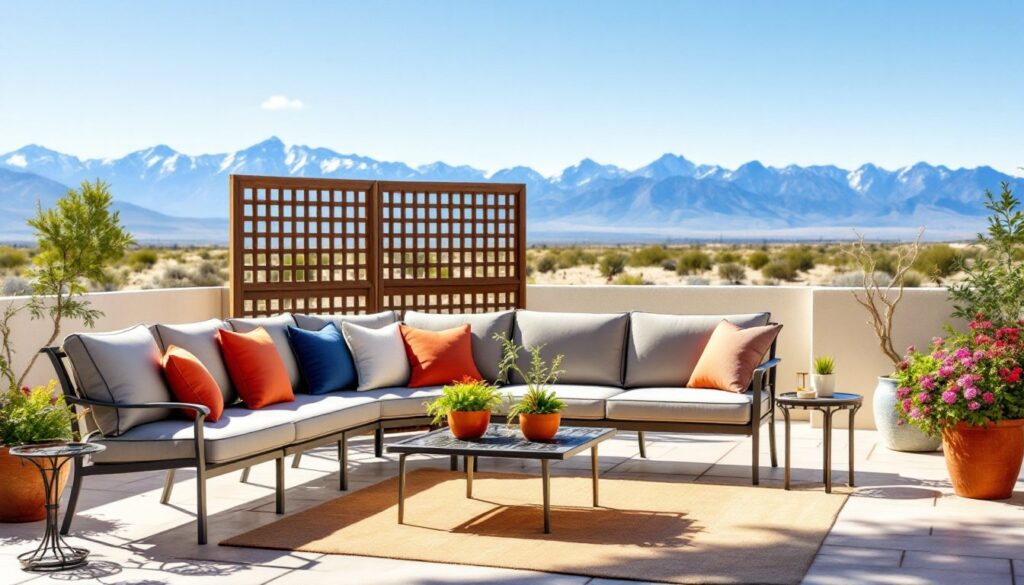
Aluminum frames are the workhorse of Utah patios. They resist corrosion, don’t rot, and handle temperature swings without warping. Aluminum doesn’t require the upkeep of wood and won’t degrade from intense sun the way painted steel might. Pair aluminum with high-quality sling fabric (usually solution-dyed polyester or Sunbrella-type materials) for seating that stays comfortable year-round. Aluminium outdoor furniture specifically designed for western climates is built to handle UV and temperature extremes.
Wrought iron and cast iron are durable in Utah’s dry climate, provided they’re sealed and painted. Salt Lake City’s low humidity means rust develops slower than in coastal areas, but iron still needs touch-ups. If choosing iron, verify it’s powder-coated and store cushions indoors in winter.
High-quality composite materials (engineered wood-plastic blends) hold up well to Utah weather. They don’t splinter like real wood, resist fading better than natural materials, and won’t crack from freeze-thaw cycles. Expect to pay premium prices for better grades: budget composites can still discolor or become brittle.
Steel furniture works if it’s fully sealed with quality outdoor paint and clear coat. Bare steel will rust quickly, especially during spring snowmelt when salt may be present on roads and walkways.
Budget-Friendly vs. Premium Choices
Budget-conscious shoppers often grab plastic resin chairs and tables, they’re affordable and lightweight. In Utah’s sun, cheaper plastics fade noticeably within 2–3 seasons and become brittle. Mid-range options ($200–500 per piece) in aluminum with basic cushions are a smarter investment. They’ll last 5–7 years with minimal care.
Premium pieces ($800+) usually feature better-quality sling fabrics, heavier gauge aluminum, and superior joinery. Home Depot Patio Furniture offers a middle ground, with options across price ranges that let homeowners compare durability specs directly. Cedar and teak wood are pricier but genuinely resist Utah weather better than cheaper lumber: they still require annual sealing.
No matter the budget, prioritize materials over style. An aluminum frame with faded cushions looks fine from a distance: a plastic chair with visible cracks and brittle edges does not.
Styling Your Utah Patio for Year-Round Enjoyment
Utah’s climate invites seasonal transformation. Spring calls for light, bright furnishings and plants breaking dormancy, think pale grays and whites. Summer is full color: jewel tones and bold prints work because the intense light carries them without washing out. Fall brings warm terracottas and deep oranges that echo the landscape.
Winter is where Utah patios shine differently. Many homeowners store cushions and lighter pieces, then arrange seating around fire pits or heaters using more durable frames. A patio isn’t dormant in Utah winter: it just shifts to a different mood. Consider investing in a mix of all-weather pieces (no cushions needed) alongside seasonal cushioned seating that lives indoors October through April.
For aesthetic inspiration, modern design ideas showcase contemporary outdoor living that translates well to high-desert spaces. Mountain homes especially benefit from natural materials, untreated wood, stone, and iron, that feel at home in Utah’s landscape. Avoid heavy covering or overly ornate Victorian-style pieces: Utah patios work best with clean lines and weathered finishes that age gracefully.
Add vertical elements, shade structures, lattice screens, or tall planters, to create microclimates and define zones. Summer shade is essential: winter sun exposure is welcome. Smart placement makes furniture functional across seasons.
Where to Shop for Patio Furniture in Utah
Local outdoor furniture retailers in Salt Lake City, Provo, and other major areas understand Utah climates and stock inventory suited to it. These shops often allow customers to sit on pieces and test cushion firmness, something online shopping can’t replicate. Staff can recommend regional favorites and discuss specific challenges (high elevation, intense sun, freeze-thaw cycles).
Home Depot Outdoor Furniture carries a wide selection with both budget and premium options. The advantage is comparison transparency: specifications, material breakdowns, and customer reviews across price points help homeowners make informed decisions.
National outdoor furniture chains like Pottery Barn, Williams Sonoma Home, and Wayfair ship to Utah. Verify weight limits, assembly requirements, and return policies, moving heavy furniture back isn’t practical. Online research paired with local showroom visits often yields the best results.
Consider timing: end-of-season sales (late August for summer stock, early November for fall items) offer significant savings. Spring brings new inventory, so waiting for selection is worth it if budgets are tight.
Furniture specialty stores that focus on high-end outdoor pieces often have in-house expertise about regional needs and may source items specifically rated for western climates. If buying premium furniture, this expertise is worth the slightly higher price.
Maintenance and Care Tips for Longevity
Prepare furniture for Utah’s off-season (November through March). Clean all pieces thoroughly, allow them to dry completely, and store cushions indoors or in a sealed container. Even “weather-resistant” cushions degrade faster if exposed to freeze-thaw cycles.
For pieces that stay outside, cover them with breathable outdoor furniture covers, not plastic tarps, which trap moisture and accelerate degradation. Inspect covers monthly to ensure they’re secure and not pooling water.
Spring prep is critical. Once temperatures stabilize above 50°F consistently, uncover furniture, inspect for winter damage (cracked paint, loose joints, mildew on cushions), and make repairs before regular use begins. Clean aluminum frames with mild soap and water: a soft brush removes dust that accumulates in Utah’s dry air. Teak or cedar pieces benefit from light sanding and resealing.
During summer, rotate cushions weekly to ensure even fading and wear. Bring cushions inside on extremely hot days (over 100°F) to prevent accelerated fabric breakdown. Apply UV protectant sprays to wood at least twice yearly.
Inspect hardware (bolts, screws, hinges) monthly. Utah’s temperature extremes cause expansion and contraction that loosens fasteners. A quick tightening prevents wobbling and extends furniture life significantly.
For metal furniture, touch up any chipped paint immediately with outdoor-grade paint matched to the original color. Rust spreads quickly once it starts, but early intervention stops it cold. Store metal furniture in a dry location during winter if possible, or at minimum elevate it off the ground to prevent pooling water underneath.
<h2 id="” data-id=””>Conclusion
Utah’s four-season climate demands patio furniture that balances durability with style. Aluminum frames with quality fabric, composite materials, and properly sealed wood outperform cheaper alternatives season after season. The investment in better materials pays off through years of reliable use and minimal replacement. Shop locally when possible to verify durability in person, and plan seasonal storage and maintenance as part of patio ownership. With thoughtful choices and consistent care, Utah homeowners can enjoy outdoor living year-round.