Table of Contents
ToggleOrange County’s climate is deceptively tough on patio furniture. While residents enjoy year-round sunshine and mild winters, the salt air from the coast, intense UV exposure, and occasional moisture create a perfect storm for rust, fading, and material degradation. Finding the right patio furniture for Orange County means understanding not just aesthetics but durability and maintenance, so your investment lasts beyond the first season. This guide walks you through material choices, where to source quality pieces locally and online, and how to design a space that actually works with your climate and lifestyle.
Key Takeaways
- Choose patio furniture in Orange County that resists salt spray, UV exposure, and coastal air—materials like teak, aluminum, and synthetic wicker are proven performers in this climate.
- Teak and mahogany cost more upfront ($400–$2,500) but require minimal maintenance, while composite materials offer lower-maintenance alternatives at the trade-off of potential color fading.
- Design your outdoor space around activity zones—dining, lounging, or conversation—with attention to sun exposure and natural shade to protect both furniture finish and your comfort.
- Synthetic wicker over aluminum frames works exceptionally well in Orange County’s dry summers, but prioritize mid-range branded pieces with solution-dyed cushions and marine-grade hardware.
- Preventive maintenance—monthly fresh-water rinses, quarterly fastener checks, and seasonal cushion storage—costs far less than replacing damaged furniture and extends lifespan significantly.
- Local Orange County retailers in Costa Mesa and Irvine offer sizing expertise and delivery options, while online options like Home Depot and Wayfair provide broader selection for patio furniture shopping.
Understanding Your Patio Furniture Needs in Orange County’s Climate
Orange County sits in USDA hardiness zones 10a–10b with temperatures rarely dipping below freezing. But that sunshine comes with a cost: UV rays degrade finishes faster than in cloudier regions, and salt spray from the Pacific can corrode metal within months if you’re not careful. The key is choosing materials and finishes designed to handle direct sunlight and coastal air.
Before you shop, ask yourself what you’ll actually use. Are you hosting large gatherings, or is this a quiet morning coffee spot? High-use seating (dinner chairs, lounges) needs sturdier construction than decorative accent pieces. Consider traffic patterns too, furniture near sliding doors or pathways gets bumped and weathered differently than a sheltered corner. Orange County’s mild climate also means you can leave some items out year-round, but that doesn’t mean zero maintenance. Even “all-weather” pieces need occasional cleaning and protective treatments. Plan for a covered patio or storage area for seasonal pieces or items you want to protect during particularly hot stretches.
Materials That Thrive in Orange County Weather
Weather-Resistant Woods and Composites
Teak, mahogany, and cumaru are traditional choices for coastal patios because their natural oils resist rot and salt exposure. Teak requires only an occasional fresh-water rinse and light sanding to maintain its silver-gray patina, no stain needed. Expect to pay $800–$2,500 for a solid teak dining set, depending on size and joinery quality. Mahogany is more affordable ($400–$1,500 for comparable pieces) but needs periodic sealing every 1–2 years in Orange County’s salt-heavy air.
Composite materials, wood-plastic blends using recycled plastic and wood fiber, offer lower maintenance at the expense of some authenticity. They won’t splinter, don’t need staining, and resist rot and pests. But, they can soften in direct sun over time and may show color fade faster than solid hardwood. Brands vary significantly in quality: cheaper composites can look chalky after two seasons. Aluminium outdoor furniture combines lightness with durability, though you’ll need to check joinery and fastener quality to avoid movement or squeaking over time.
Metal and Synthetic Wicker Options
Aluminum frames with powder-coat finishes are nearly bulletproof in Orange County. They won’t rust, they’re lightweight for rearranging, and the finish holds color well. The tradeoff: metal conducts heat, so metal frames can be uncomfortably hot to touch in direct sun (touch it first before buying). Steel is heavier and stronger but rusts faster than aluminum unless the finish is flawless, any nick or scratch invites corrosion, especially near the coast.
Synthetic wicker (polypropylene or polyethylene) woven over aluminum frames mimics natural rattan’s look without the rot risk. It’s comfortable, relatively durable, and resists UV fading better than you’d expect. In Orange County’s dry summers, synthetic wicker actually performs well. Just avoid low-quality imports with thin weave and weak adhesive: they unravel within a year. Mid-range pieces ($600–$1,800 for a four-seat set) from established outdoor-furniture brands hold up better than bargain bins. Check that cushions are solution-dyed (color runs through the fabric) rather than surface-dyed, and that zippers and thread are marine-grade.
Where to Shop for Quality Patio Furniture in Orange County
Orange County has several solid brick-and-mortar options in Costa Mesa, Irvine, and Laguna Niguel. Local furniture stores often stock pieces tested for regional weather and offer in-person sizing, crucial because internet photos don’t reveal whether that sofa will actually fit your space. Staff can also advise on local delivery and assembly, which add significant cost if you’re ordering online.
For broader selection and comparison shopping, Home Depot patio furniture offers the convenience of local pickup and a solid return window. Home Depot’s house brands hold up decently for the price point, though QC varies. Wayfair and Overstock stock deeper inventories but shipping costs and lead times can sting. Specialty retailers like West Elm and Restoration Hardware carry higher-end pieces but expect 30–40% premiums. Design-focused shoppers often find inspiration on Gardenista’s curated outdoor furniture collection, which aggregates pieces from multiple makers with detailed reviews.
Don’t skip checking local Facebook Marketplace or Craigslist for gently used teak and high-end pieces. Orange County homeowners upgrade frequently, and you can find barely-used sets at 40–60% off retail. Just inspect for rust, cracks, or cushion damage before committing. If you’re serious about design coherence, regional resources like Southern Living and Design Milk both feature patio layouts and furniture pairings that work for warm climates similar to Orange County’s.
Designing Your Outdoor Space: Style and Layout Tips
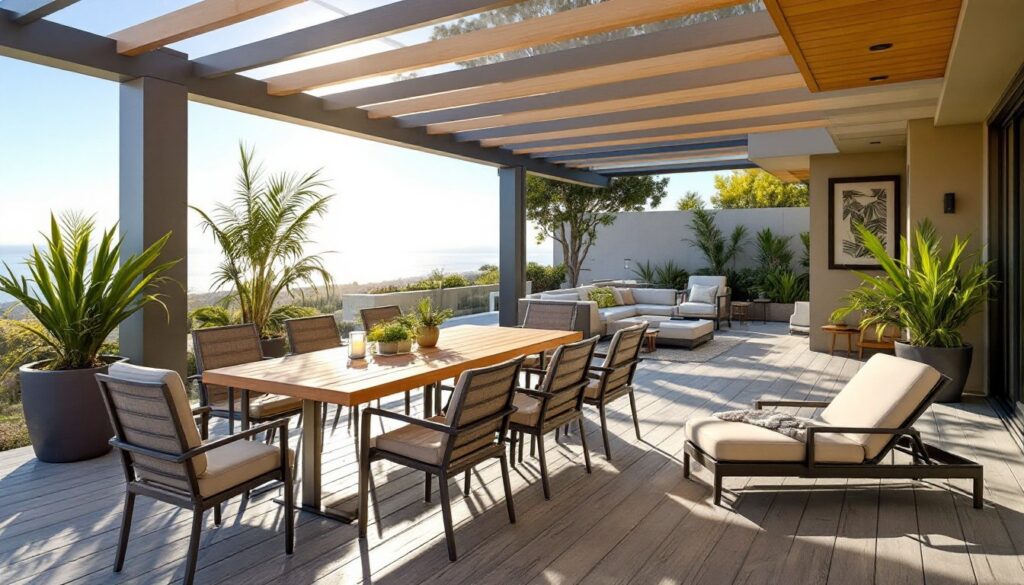
Layout starts with zones. Define your primary use: dining, lounging, cooking, or conversation. Group furniture to encourage that activity. A dining table needs clearance for chairs to pull out, typically 3 feet on each long side. Seating areas work best in clusters facing one another or a focal point like a fire table or water feature. Avoid scattering pieces haphazardly: empty patio feels cold and unused.
Sun exposure shapes everything. Note which areas are full sun, partial shade, and shadowed by afternoon. Place lounges and casual seating in consistent shade or partial shade. Dining tables work better in afternoon shade so guests aren’t squinting at food. If your patio lacks natural shade, consider a retractable awning, shade sail, or pergola, these extend usability and protect furniture finish from constant UV.
Material and color should complement your home’s exterior. Teak’s warm honey tones pair well with stucco and warm stucco palettes. Cool grays and blacks suit modern homes with clean lines. Match cushion and fabric colors to hardscape and siding for cohesion rather than clashing. Oversized cushions read more luxe but trap moisture in Orange County’s humid coastal air: medium-thickness cushions dry faster and age better. Leave breathing room between pieces, crowded patios feel cluttered and restrict traffic flow. A 1,200-square-foot patio can comfortably host a dining table, a lounge area, and a side table without feeling cramped.
Maintenance and Care for Lasting Results
Preventive maintenance beats restoration. Rinse furniture monthly with fresh water to remove salt spray and dust, a garden hose works: avoid pressure washers that can splinter wood or damage finishes. For teak, lightly sand with 120-grit sandpaper every 1–2 years to refresh the surface: you don’t need to refinish if you prefer the silvered look.
Cushions are your biggest maintenance headache. Bring them indoors during the rainy season (November–March) or store under a waterproof cover. Mold and mildew thrive in damp cushions, even in dry Orange County, especially if cushions sit against upholstered furniture or block airflow. Wash cushion covers every 2–3 months with mild soap and water: dry completely before replacing. Solution-dyed fabrics resist staining better than cheaper alternatives but aren’t stain-proof.
Metal frames need inspection for corrosion, especially bolts, screws, and welded joints. Tighten loose fasteners quarterly, vibration and temperature fluctuations cause creep over seasons. If powder coat is scratched, touch it up with spray paint matched to the original color: bare metal invites rust. For synthetic wicker, brush out debris and hose down when dusty. UV degradation is normal and unavoidable, but higher-quality weave slows it. If a wicker strand loosens, trim it flush rather than pulling: pulling unravels surrounding weave.
Consider protective covers for expensive pieces during off-season or extended heat waves (above 95°F regularly). Covers trap moisture if not ventilated properly, so choose breathable fabric covers over plastic tarps. Store disassembled pieces indoors if possible: exposure ages finishes faster. Regional humidity and salt spray in Orange County make consistent, light maintenance far cheaper than reactive repairs. Set a calendar reminder for seasonal cleaning and inspection, 10 minutes a month prevents $500 replacement costs.