Table of Contents
ToggleSetting up a patio that’s both functional and visually appealing doesn’t require designer pricing or endless browsing through catalogs. American patio furniture has evolved significantly over the past decade, blending classic craftsmanship with modern materials that actually hold up to weather and heavy use. Whether you’re updating a worn-out deck or building an outdoor entertaining space from scratch, understanding your options for American patio furniture means making smart choices about materials, layouts, and long-term maintenance. This guide walks you through the essentials, from identifying styles and materials that fit your home to arranging the space efficiently and keeping your pieces in top shape for years.
Key Takeaways
- American patio furniture blends classic craftsmanship with modern materials, offering both timeless Adirondack styles and contemporary modular designs that suit any home aesthetic.
- Material choice directly impacts durability: teak costs $800–$2,500 but lasts decades, while aluminum frames ($400–$1,200) offer the best value for humid climates without rusting.
- Budget-friendly aluminum and Polywood sets ($400–$1,000) deliver quality without compromise, especially when purchased as complete sets rather than individual pieces.
- Proper patio sizing prevents cramped layouts—a 4-seater dining table needs 10′ × 12′ of space, while lounge sectionals require 15′ × 15′ for comfortable entertaining.
- Maintenance is essential: seal wood furniture every 12–18 months, store cushions indoors seasonally, and inspect metal frames quarterly to prevent rust and extend lifespan by years.
- Shop seasonal sales at big-box retailers like Home Depot in late August or post-July 4th clearance, and always verify return windows are at least 30 days for durability testing.
Understanding American Patio Furniture Styles and Materials
Classic Americana and Modern Design Trends
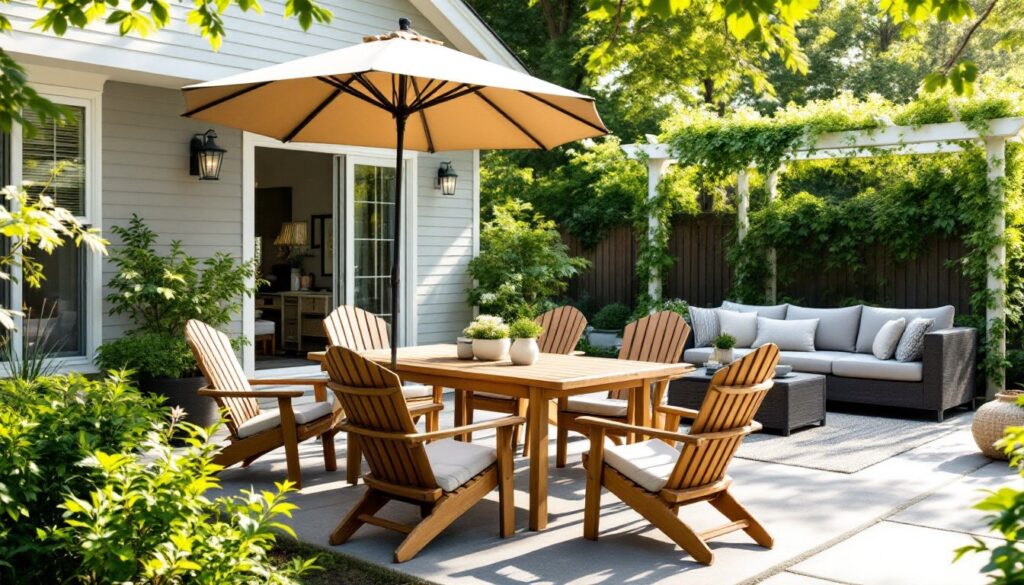
American patio furniture draws from two distinct traditions: the rustic farmhouse aesthetic and sleek contemporary minimalism. Classic Americana pieces, think Adirondack chairs, cottage-style rockers, and traditional benches, emphasize comfort and timeless appeal. They’re often made from wood, wrought iron, or cast aluminum and work well in traditional, colonial, or country-style homes.
Modern American design, by contrast, favors clean lines, neutral palettes, and modular layouts. Mid-century modern influences show up in tapered legs, angled backs, and mixed materials like teak paired with powder-coated steel. Contemporary pieces often emphasize functionality: stackable chairs, nesting tables, and modular sectionals that adapt to smaller or larger gatherings. Both approaches prioritize quality construction and weather resistance, but the visual language differs significantly. Your choice depends on your home’s exterior architecture and how the patio will function, whether it’s a quiet reading nook or an entertainer’s hub.
Essential Materials for Durability and Comfort
The material you choose makes or breaks a patio investment. Teak wood is a premium natural option, dense, oily grain resists rot and insects without treatment, and it develops a silvery patina over time. Plan on $800–$2,500+ for a quality teak four-piece set. Pressure-treated pine and cedar cost less ($300–$800 for a basic set) but require regular sealing every 1–2 years to prevent splintering and decay.
Aluminum frames (often with cushioned seat pads) are lightweight, rust-proof, and affordable ($400–$1,200 for a dining set). They’re ideal for humid coastal climates. Wrought iron is durable and can support larger frame designs, though it’s heavier and needs rust-preventative paint touch-ups. Wicker or rattan (usually synthetic now, not natural plant fiber) pairs well with metal frames and offers a relaxed, traditional look, check that outdoor wicker is UV-stabilized polypropylene, not standard indoor wicker, or it’ll degrade within a season.
Comfort matters too. Look for high-density foam cushions with outdoor-grade fabric (solution-dyed acrylic like Sunbrella® or performance polyester). Budget-friendly cotton blends fade and mildew quickly: premium synthetics last 3–5 years with proper care. Don’t skip the cushions, they’re the difference between a chair you actually sit in and one that collects dust.
Budget-Friendly Options Without Compromising Quality
Not every outdoor space requires a four-figure investment. Starting with two key pieces, a comfortable dining or lounge set and a few accent chairs, lets you build gradually and test what actually works in your space.
Aluminum-frame sets with basic cushions offer the best bang for buck. A 6-piece aluminum patio set (table plus four chairs) runs $500–$1,000 and handles moisture, salt air, and UV exposure without warping. Brands sold at Home Depot Patio Furniture and similar retailers offer reliable mid-range options with 2–3 year warranties.
Polywood (recycled plastic lumber) is worth considering if you want the wood look without maintenance. It’s priced between basic aluminum ($400–$600) and solid teak ($1,500+). Sets don’t splinter, never need staining, and resist fading and insects, trade-off is they feel synthetic underfoot.
Where you shop impacts price significantly. Big-box retailers like Home Depot and Lowe’s have seasonal sales (late August through September, and post-July 4th clearance). Online specialists like Gardenista’s outdoor collection and local patio furniture showrooms often match prices on comparable items if you ask. Watch for bundles: buying a set (table + four chairs) typically costs less than buying pieces separately. Avoid ultra-cheap sets under $200, they’re often flimsy and fall apart within a season.
Sizing and Arranging Your Patio Layout
Before ordering anything, measure your patio square footage and account for traffic flow. A standard dining table (4-seater) needs 10′ × 12′ of clear space: add another 2–3 feet on each side if you want room to pull chairs out comfortably. For a 6-seater table, plan 12′ × 14′ minimum.
Lounge furniture (sofas, sectionals, and low tables) requires different spacing. A sectional seating arrangement typically spans 15′ × 15′ and works best on patios where you’re primarily relaxing, not eating. Smaller patios benefit from a bistro setup, two chairs and a small round table (30-36″ diameter), which needs just 6′ × 8′.
Account for sun exposure and wind patterns. East-facing patios get morning sun: west-facing ones bake in afternoon heat. If your patio is exposed, choose furniture with deep seat backs or pair pieces with an awning or pergola. Home Depot Outdoor Furniture collections include shade options like umbrellas (7–9 feet diameter, $80–$300) and shade structures if you need them.
Leave at least 3 feet of clear passage between furniture groupings and 18 inches from the house edge. Overcrowding makes a space feel cramped and blocks airflow. If your patio is narrow, orient furniture parallel to the house rather than perpendicular, it makes the space feel longer.
Maintenance Tips to Extend Your Furniture’s Lifespan
Your patio furniture’s lifespan depends almost entirely on post-purchase care. Start immediately: clean and inspect all pieces when they arrive. Remove plastic wrapping and allow wood to breathe. If wood comes with a gray film (milling residue), wipe it down with a soft brush and let it dry fully.
For wood furniture, seal or oil every 12–18 months depending on climate. Teak needs less intervention (you can let it silver naturally or maintain the golden color with annual teak oil). Cedar and pine require spar urethane or marine-grade sealant reapplied every 1–2 years, especially in humid regions. Sand lightly between coats to avoid buildup.
For metal frames and aluminum, inspect for corrosion quarterly. Wash salt spray off immediately in coastal areas. Touch up scratches in paint with rust-preventative spray paint ($8–$15 per can) before rust develops. Aluminum doesn’t rust but can oxidize: a mild bleach and water solution (1:10 ratio) removes oxidation stains without damaging the frame.
For cushions, store them indoors in winter or use weatherproof storage boxes. Sunbrella and solution-dyed fabrics fade slower, but even premium cushions benefit from a cover or storage during off-season months. Wash cushions annually with mild soap and a soft brush: air-dry completely before stacking. Mildew thrives in damp, compressed cushions stored wet.
General upkeep: Dust furniture monthly, sweep under tables, and rinse the whole setup with a garden hose 2–3 times per year. Don’t use pressure washers on wood, they damage grain and hasten deterioration. Winter storage (if you live in freezing climates) extends life 5–10 years for wood and fabric pieces: metal frames handle cold fine but benefit from a tarp in heavy snow regions.
Where to Shop and What to Look For
Patio furniture spans a huge range of sources, each with trade-offs in pricing, selection, and service.
Big-box retailers (Home Depot, Lowe’s, Wayfair) offer convenience and seasonal sales. Return policies are straightforward, and assembly is often available. Mid-range aluminum and resin wicker sets dominate here.
Specialty patio shops carry higher-end lines (Teak Plus, Restoration Hardware, Polywood) and often have showrooms where you can sit in pieces before buying. Staff knowledge is typically deeper, and they handle custom orders and special finishes.
Online specialists like Gardenista curate collections from multiple brands, making comparison easier. Shipping can be steep for heavy furniture ($150–$400), but they often waive fees on orders over $1,000.
Designer and lifestyle sites (RH, West Elm, Pottery Barn) sell higher-priced sets ($2,000–$8,000+) with strong warranty and design support. Hunker and Country Living publish reviews and buying guides if you want editorial guidance before purchasing.
What to look for: Check weight specifications and frame material first. Ask about cushion fabric content and warranty (typically 1–3 years for cushions, longer for frames). Request delivery and assembly details, many online orders arrive unassembled or in multiple boxes. Read reviews for durability over time, not just initial impressions: look for comments about rust, fading, or wobbly joints after 2–3 seasons. Finally, confirm return windows are at least 30 days, you may spot issues only after the first rain or sun exposure.