
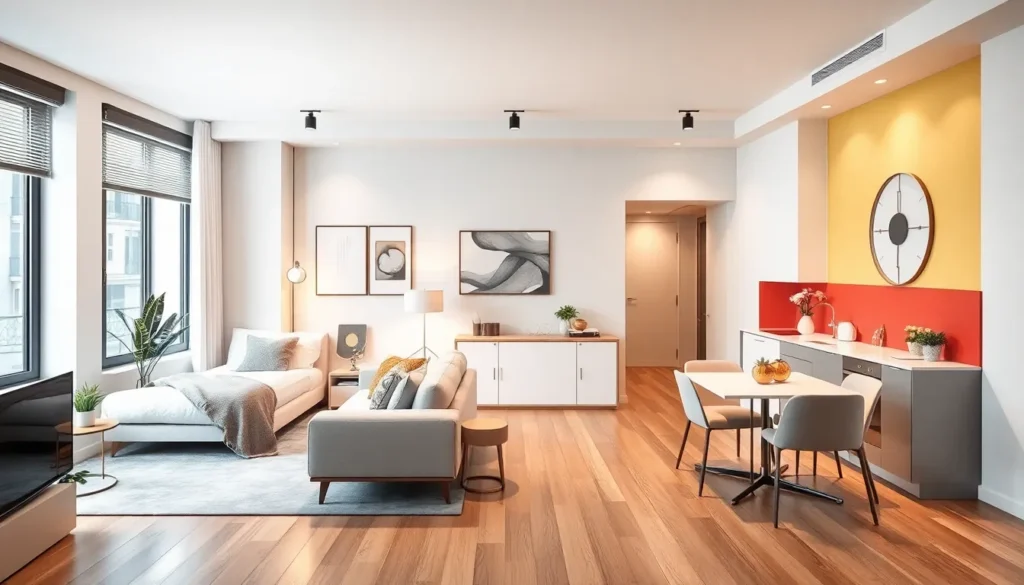
Living in a studio apartment may sometimes feel like solving a puzzle where each piece has to fit just right. But don’t worry. With the right interior design strategies, these compact spaces can shine brighter than a diamond in a jewelry store. So, whether you’re a minimalist looking to embrace simplicity or a maximalist ready to fill every corner with personality, this guide is here to help you turn your studio into a stylish haven. Let’s immerse.
Understanding Studio Apartment Layouts
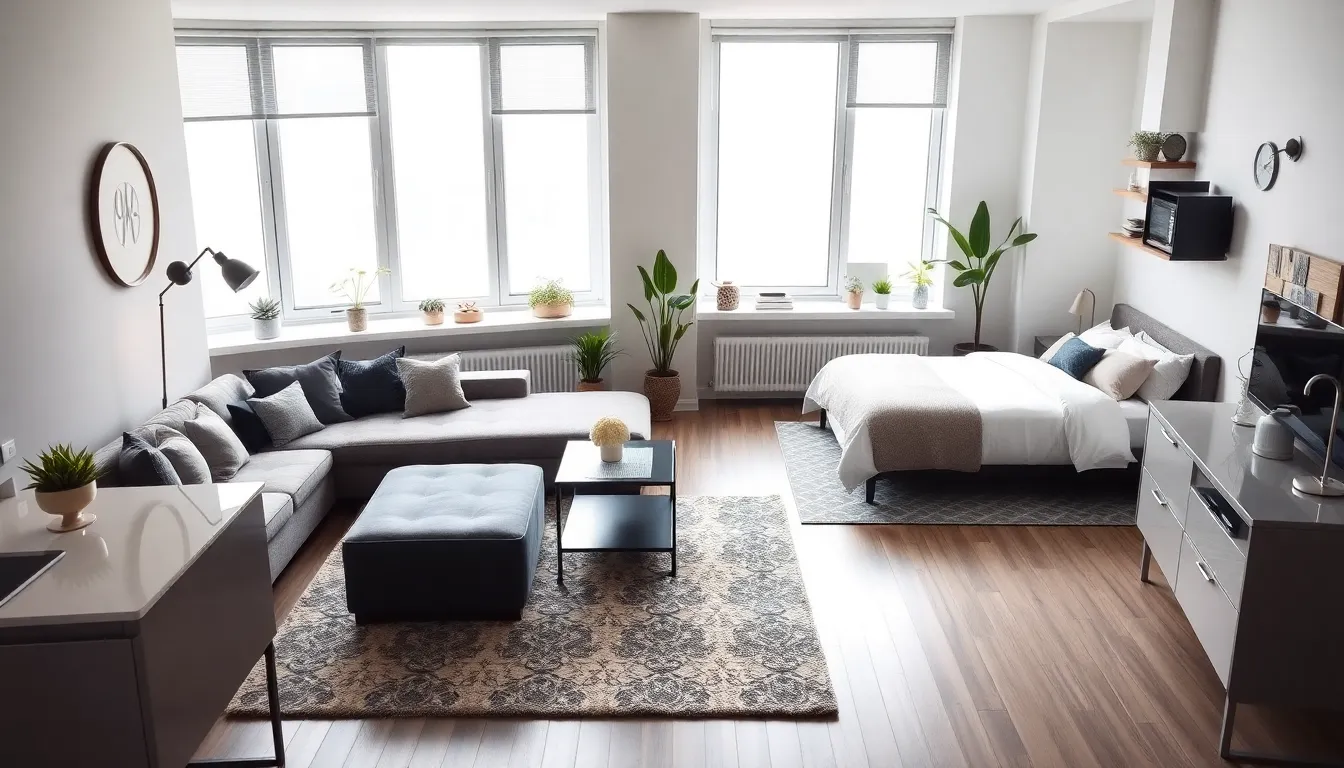
Studio apartments are known for their efficiency, usually consisting of one open space that combines the living area, sleeping area, and kitchenette. There’s no specific room designation, which might sound challenging at first. But, this flexibility offers a world of creative opportunities.
When designing a studio, think of it as a blank canvas. The key is to clearly define areas using furniture arrangements and decor. Zones can be created with rugs, shelving, or even strategically placed plants. It’s about making the most out of the space while maintaining the openness that makes studios feel expansive.
Benefits of Studio Apartment Living
Living in a studio might initially seem limiting, but there are countless benefits. One of the major advantages is affordability: studio apartments are typically more budget-friendly than larger spaces. This makes them perfect for young professionals or anyone starting out.
Also, the maintenance is a breeze. With fewer rooms comes less cleaning and upkeep, giving residents more time to enjoy life or binge-watch their latest favorite series. Finally, they can foster a cozier atmosphere, where comfort and intimacy reign supreme.
Key Elements of Studio Apartment Design
Color Schemes and Decor Ideas
Choosing the right colors can drastically alter the perception of space. Lighter hues like whites, creams, and pastels can make your studio feel larger and more open. Accent walls in bold colors can draw attention and add character without overwhelming the space.
When it comes to decor, think vertically. Wall art, shelves, and mirrors not only add personality but also give the illusion of added space. Minimalist decor, such as geometric designs or natural materials, can create a clean, modern vibe.
Furniture Selection and Arrangement
Selecting furniture that maximizes utility is critical in a studio apartment. Consider pieces that are both stylish and functional, like a sofa bed or a coffee table that doubles as storage. Arranging furniture to create distinct zones will enhance both the functionality and aesthetic of the space.
For instance, placing a small dining table in one corner away from the bed can create a unique niche for dining, while maintaining an open look in the center.
Maximizing Space with Multi-Functional Pieces
Multi-functional furniture is the holy grail of studio apartment design. Think about a daybed that serves as a couch by day and a bed by night or nesting tables that can be tucked away when not in use.
Consider also hidden storage options, like ottomans or benches with compartments. These keep clutter at bay, creating a clean and inviting environment. When every piece in your studio serves more than one purpose, the space feels much larger, and life becomes a little easier.
Lighting Techniques for a Cozy Atmosphere
Lighting can transform any space from dull to dazzling. In a studio apartment, it’s essential to layer lighting types. Start with overhead lighting for general illumination, then add task lighting such as desk lamps or reading lights in specific areas.
Don’t forget the power of natural light. Use sheer curtains to allow sunlight to filter in while maintaining privacy. Mirrors can also play a significant role in reflecting light and giving the illusion of a larger space.
Incorporating Personal Style and Comfort
Every studio needs a touch of personal flair. Decor items like throw pillows, blankets, and artworks can express one’s personality. But, it’s essential to strike a balance. Too many accessories can make the space feel cluttered, while too few might leave it feeling cold.
Mixing different textures can elevate comfort and design, think of soft textiles paired with sleek furniture. Eventually, the goal is to create a cozy, inviting space that truly feels like home.


