Table of Contents
ToggleA well-arranged living room isn’t about matching Instagram aesthetics, it’s about making the space work for how you actually live. Whether you’re hosting monthly game nights, working from your couch, or just unwinding after a long day, furniture placement either supports your lifestyle or fights against it. The challenge is figuring out what arrangement works best for your room’s size, shape, and how light flows through it. This guide walks you through seven proven furniture arrangement strategies that address common living room challenges and show you how to maximize every square foot, create visual flow, and design a space that’s both functional and visually cohesive.
Key Takeaways
- Float your seating arrangement 12–18 inches from walls in small living rooms to create an intentional, gathered feeling rather than pushing everything against the walls, which makes spaces feel cramped and disconnected.
- Identify or create a clear focal point—such as a fireplace, TV, or bold artwork—and orient your furniture arrangement around it to give the room visual purpose and prevent the space from feeling disjointed.
- In open concept living rooms, use area rugs and furniture placement as invisible boundaries to define zones without blocking sight lines, and keep major traffic pathways 3–4 feet wide and unobstructed.
- For conversation-focused entertaining, arrange seating in a U-shape or circular formation with 18–24 inches between seat edges to encourage connection, and consider symmetry with matching accent chairs to signal a room designed for people.
- Scale and multipurpose furniture are critical in tight spaces—opt for loveseat-sized sofas, vertical storage, and dual-function pieces like ottomans with storage to maximize function without overwhelming the room.
- Adapt furniture arrangement to your room’s specific shape: break long narrow rooms into overlapping zones, position sofas in L-shaped room corners to anchor both walls, and float seating away from architectural obstacles to incorporate them intentionally.
Maximizing Small Living Rooms With Smart Furniture Placement
Small living rooms demand strategy, not sacrifice. The cardinal rule: avoid pushing everything against the walls. That instinct actually makes rooms feel smaller and disconnects the furniture from the space’s center, which creates an awkward, empty feeling in the middle.
Instead, float your seating arrangement in the center of the room. Position a sofa 12 to 18 inches from the wall, and angle accent chairs toward a focal point (coffee table, TV, or window). This psychological anchoring makes the room feel intentional and gathered, not cramped. Use multipurpose pieces like an ottoman with storage or a console table that doubles as a desk to reduce clutter while maximizing function.
Scale matters tremendously in tight quarters. A full sectional that eats three-quarters of the room leaves nowhere to move. Instead, opt for a loveseat or apartment-sized sofa paired with a compact accent chair. Vertical storage, tall bookshelves, floating shelves, or wall-mounted media units, draws the eye upward and frees floor space. Light colors and low-profile furniture (legs visible under pieces) prevent that cave-like compression that makes small rooms feel suffocating.
When furnishing a tight space, prioritize pieces that earn their real estate. A bulky coffee table might be replaced with a narrow console or nesting tables you can tuck away when not needed. Mirrors opposite windows bounce light around and create an illusion of depth. Even Home Goods Furniture: Transform selection benefits from focusing on one or two anchor pieces rather than filling every corner.
Open Concept Living Rooms: Creating Flow Between Spaces
Open concept layouts blur the lines between living, dining, and kitchen spaces, and that openness demands clarity in how you arrange furniture. The temptation is to cram everything into one massive room, but successful open plans use furniture placement as invisible walls that define zones without actual barriers.
Start by anchoring your living area with a sofa that faces an entertainment focal point. Position it to create a subtle boundary between the living zone and the dining or kitchen area beyond. An area rug under the sofa and coffee table reinforces that psychological separation: the rug becomes a visual boundary that says “this is the living room zone” without blocking sight lines or traffic flow.
Consider traffic patterns before placing furniture. Ideally, someone walking from the kitchen to the dining room shouldn’t have to navigate around a sofa. Keep major pathways 3 to 4 feet wide and unobstructed. If your open plan forces you to work with tight corridors, arrange seating to hug the perimeter rather than floating in the middle.
Height variation helps too. Mix low-profile seating with taller bookshelves or media walls to create visual interest without chopping up the space physically. Light, open-frame furniture (glass-top tables, transparent accent chairs) preserves sight lines and doesn’t feel heavy. Resources like Dwell’s living room layout article show how strategic furniture choices define zones naturally.
The Focal Point Method: Organizing Around Your Room’s Center
Every room has a natural focal point, a fireplace, a wall of windows, a TV, or an architectural detail. Arranging furniture around a clear focal point creates order and gives the room visual purpose. If you skip this step, the eye wanders, and the space feels disjointed.
Start by identifying your strongest focal point. A fireplace or large window beats a blank wall every time. If your room doesn’t have a natural focal point, create one: hang a bold piece of art, install floating shelves, or position your TV on a featured wall. Once you’ve chosen your anchor, orient seating to face it. A sofa directly across a fireplace is the classic setup for good reason, it works.
Distance matters. The sofa should sit 8 to 10 feet from a TV for comfortable viewing without craning your neck. Too close, and movies become an eye-strain marathon: too far, and dialogue gets lost. If your room doesn’t allow that spacing, consider angling the sofa slightly or mounting the TV higher on the wall.
Use secondary furniture to reinforce the focal point without blocking it. Two accent chairs can flank a fireplace or angle toward it, creating a conversation cluster without obstructing sightlines. Coffee tables and side tables should complement the focal arrangement, not fight it. MyDomaine’s design guides demonstrate how focal-point-driven layouts anchor even awkwardly shaped rooms with purpose and flow.
Conversation-Focused Seating Arrangements for Entertaining
If your living room is built for gathering, forget the TV-facing standard. Instead, create an intimate seating pod where people can actually see and hear each other. This arrangement trumps everything else when entertaining matters.
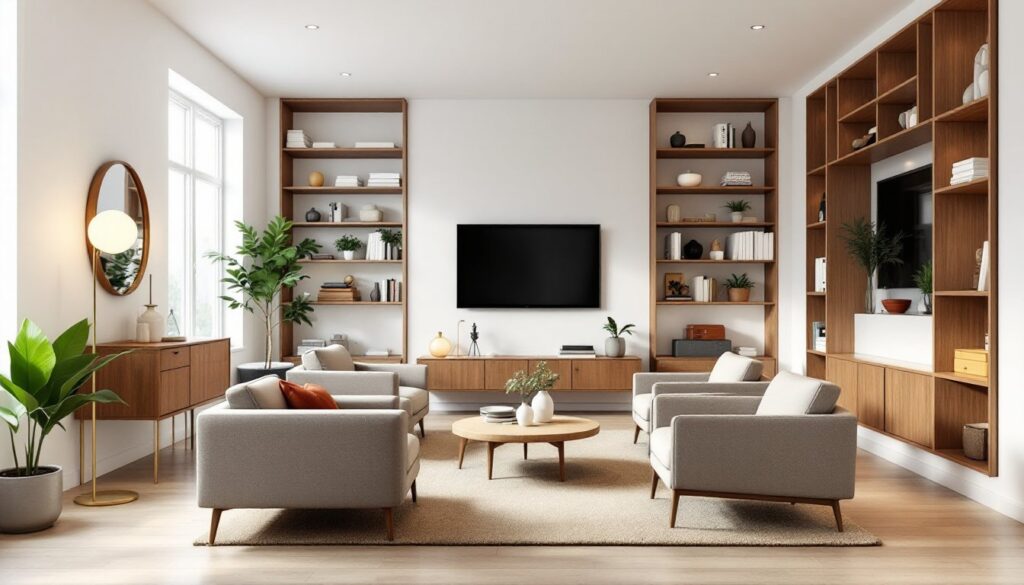
Position seating in a U-shape or circular formation. A sofa plus two accent chairs angled inward creates a natural conversation triangle. Add a low ottoman or coffee table in the center for drinks and snacks, it becomes a functional gathering point. The magic number is usually 18 to 24 inches between seat edges: that’s close enough for connection without feeling claustrophobic.
Symmetry reinforces hospitality. Matching accent chairs on either end of a sofa, paired with identical side tables, signals a room designed for people, not screens. It doesn’t mean everything must match perfectly, balance and visual weight matter more than identical twins. A larger armchair on one side can be balanced by two smaller chairs on the other.
If your room must accommodate both TV and conversation, compromise by angling the seating slightly. A sectional can face the TV while still allowing 70 percent of the seats to see each other. Alternatively, position the TV on a swivel mount so it slides out of the conversation zone when guests arrive. Home Furniture: Transform Your Space selections should prioritize pieces that work for active entertaining, durable upholstery, easy-to-move accent chairs, and storage solutions that hide clutter when company’s coming.
Balancing Function and Style in Contemporary Layouts
Modern living rooms often demand dual duty: entertainment hub and functional workspace. Your furniture arrangement needs to support both without looking schizophrenic.
The key is layering zones. Designate a primary living zone with main seating, then carve out a secondary work or activity area nearby. A desk tucked into an alcove, a reading nook by the window, or even a small gaming table can coexist with traditional seating if you’re intentional about placement. Use furniture grouping and lighting to define zones rather than physical barriers.
Color and material continuity tie diverse functions together. If your main seating is neutral linen, carry that palette through your workspace, a natural wood desk, a linen office chair, perhaps a shared area rug. Mismatched aesthetics (heavy leather office chair next to modern fabric sectional) create visual chaos, even if both pieces are individually great.
Storage is the unsung hero of functional layouts. Built-in shelving, console tables with baskets, or ottomans with hidden compartments keep gear, blankets, and daily detritus out of sight. A coffee table with shelves underneath, rather than a solid top, adds storage without bulk. These choices preserve the visual breathing room that makes contemporary spaces feel calm and intentional rather than cluttered and makeshift.
Room Shape Matters: Adapting Arrangements to Your Space
Long and narrow rooms, awkward L-shapes, and rooms with columns demand furniture creativity. There’s no one-size-fits-all solution because your walls dictate the rules.
In a long, narrow living room, break the space into two overlapping zones rather than one stretched-out row. Position a sofa perpendicular to the long wall, then float a secondary seating area behind it. This approach creates visual interest, prevents the bowling-alley effect, and lets people gather without sitting in a line like theater seats. An area rug in each zone reinforces the separation.
L-shaped rooms are actually a gift if you use them right. The corner becomes a natural focal point. Position your sofa facing into the corner, anchoring both walls simultaneously. This arrangement fills dead space, creates an intimate seating pocket, and uses the awkward geometry to your advantage rather than fighting it.
Rooms with columns or architectural obstacles need floating furniture. Instead of pushing pieces against walls and working around pillars, float your seating away from the obstruction. A sofa facing perpendicular to a column, with chairs angled slightly inward, incorporates the obstruction into the overall composition rather than highlighting its intrusion. Professional resources like 20 Living Room Layout Ideas showcase how real homes solve these challenges, proving that unconventional room shapes don’t prevent good design, they just require intentional arrangement choices.
Conclusion
Furniture arrangement isn’t magic, it’s applied common sense backed by proven principles. Start with your room’s shape, identify a focal point, consider how you actually use the space, and arrange accordingly. Measure twice, move pieces in stages, and live with an arrangement for a few days before declaring it final. Your living room will serve you far better when function and flow take priority over perfection.