Table of Contents
ToggleYour living room is begging for personality, and accent furniture is the secret weapon to inject it. Unlike the sofa that anchors the room, accent pieces, a striking armchair, a sculptural side table, a bold shelving unit, let you experiment with color, texture, and style without committing to a major overhaul. Whether you’re working with a compact urban apartment or a sprawling family room, the right accent furniture transforms a generic space into one that actually reflects who you are. This guide walks you through the best approaches to choosing and arranging living room accent furniture that works harder than it looks.
Key Takeaways
- Accent furniture transforms a generic living room into a personalized space by injecting color, texture, and style without requiring major renovations.
- Statement accent chairs and ottomans provide visual impact while remaining functional, offering an easy way to test bold colors before committing to wall changes.
- Striking storage pieces like credenzas and open shelving become focal points while serving practical purposes; aim for 60% filled, 40% empty space for intentional styling.
- Material pairings and texture contrasts—such as velvet with marble or leather with woven textiles—create richness and prevent rooms from feeling flat.
- Limit statement pieces to one or two anchor items to avoid visual chaos, and arrange accent furniture by function in intentional clusters for a curated, designed appearance.
- Start with a single bold accent piece and let your room evolve gradually rather than introducing multiple statement items at once.
What Is Accent Furniture and Why It Matters
Accent furniture fills the gap between your main pieces, the sofa, coffee table, and entertainment console, and your blank walls. These are the unexpected elements that grab attention: an eye-catching wingback chair in jewel tones, a sculptural floor lamp, a vintage credenza, or a geometric ottoman. They’re purposefully distinctive, meant to stand out rather than blend in.
Why does it matter? Accent pieces do the heavy lifting for room personality. A neutral sofa can feel sterile on its own, but pair it with a rust-colored accent chair and a brass side table, and suddenly the room has warmth and intention. Accent furniture also allows you to test-drive bold color or pattern choices before committing to a repaint or new rug. You can swap out a single chair far more easily than you can change your walls.
When browsing living room accent furniture, think about what your room is missing. Does it need visual interest? A focal point? Storage? Texture contrast? Once you identify the gap, finding the right piece becomes much easier.
Bold Seating Options That Anchor Your Room
Statement Chairs and Armchairs
A well-chosen accent chair can become the most-commented-on piece in your home. The best statement chairs balance visual impact with genuine comfort, you’ll actually want to sit in them. Look for distinctive silhouettes: a mid-century modern wingback, a channel-tufted barrel chair, or a sculptural lounge chair with unexpected proportions.
When selecting a statement chair, consider scale. In a smaller room, an oversized club chair might overwhelm: a sleeker wingback or a vintage-style accent chair works better. In larger spaces, don’t be afraid of drama, a low-slung 1970s-inspired lounge chair or a high-back reading chair makes a real statement. Material matters too. Velvet, linen, or a patterned fabric reads as more intentional than solid neutral upholstery.
Check the best accent chairs at established design publications to see what works across different styles and budgets. Most quality accent chairs run between $400 and $1,500 depending on construction and upholstery.
Unique Ottoman and Bench Solutions
Ottomans and benches do triple duty: seating, footrests, and hidden storage on many designs. A sculptural ottoman with a standout upholstery pattern or an unexpected material (poured concrete, for instance) adds texture without taking up wall space like a chair would.
Wooden benches, especially those with storage underneath, work as statement pieces when finished in a bold color or rich wood stain. A leather-upholstered bench at the foot of a sofa or facing a fireplace becomes a focal point while remaining functional. Look for pieces with visible joinery or distinctive legs: they signal quality and intentionality. Ottoman heights vary: make sure yours sits slightly lower than your sofa cushions for comfortable foot elevation.
Storage and Display Pieces That Pop
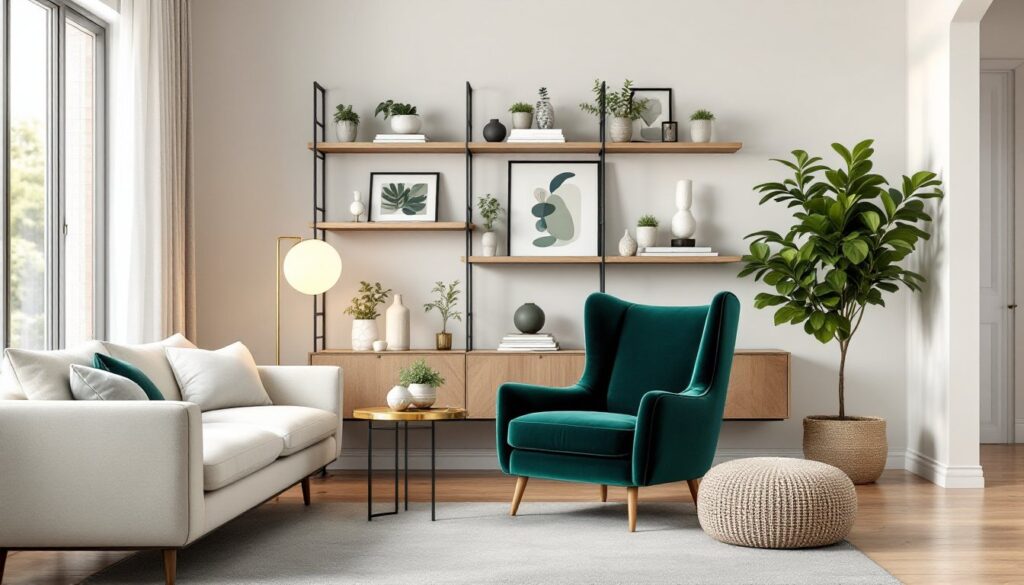
A striking shelving unit, credenza, or bookcase can anchor an entire wall and showcase your style in one go. Open shelving in wood or metal, especially in a bold finish like matte black or deep blue, becomes wall art when styled with intention. Unlike closed cabinetry, open shelves let you rotate décor seasonally and display collections without hiding them away.
Credenzas with mixed materials appeal to modern and traditional tastes alike. A walnut credenza with a marble or concrete top, or one with a mix of wood and metal, adds personality while storing items you’d rather not display. These pieces typically measure 48 to 72 inches wide and work best along a wall where they won’t obstruct traffic flow.
Wall-mounted shelving units save floor space in compact living rooms. Floating shelves in solid wood or steel brackets create a cleaner look than traditional bookcases, especially in minimalist or industrial spaces. When styling storage pieces, remember that negative space, empty shelves or areas without décor, makes the displayed items stand out more. A rule of thumb: aim for 60% filled, 40% breathing room.
Color and Material Choices for Maximum Impact
Color is your fastest path to impact. A jewel-toned chair, emerald, sapphire, or deep terracotta, reads as intentional and sophisticated compared to beige. If you’re hesitant about committing to bold color on a large piece, start with an accent chair or ottoman. Paint color on walls can always change: accent furniture gives you flexibility.
Material pairings create richness. Pair a velvet chair with a marble-topped side table, or mix a linen bench with brass or copper hardware. These combinations signal thoughtfulness and prevent a room from feeling flat or one-dimensional. Texture contrast, smooth leather against rough woven textiles, shiny metal against matte wood, draws the eye and makes a space feel intentional.
Wood tones deserve thought too. If your room skews warm (golden oak, cherry), choose accent pieces in complementary warm finishes. Cool-toned spaces (gray, whitewashed) benefit from cool-toned woods like white oak or walnut. Mixed-metal finishes work in most settings, though matching existing hardware (door handles, light fixtures) creates cohesion. Modern design trends in 2026 lean toward contemporary furniture with minimal ornamentation and honest material expression.
Arrangement Tips for a Cohesive Design
Arranging accent furniture requires a light touch. Too many bold pieces compete for attention: a room with five statement items feels chaotic rather than curated. Aim for one or two anchor pieces, perhaps a striking accent chair and a credenza, then support them with secondary pieces in complementary colors or finishes.
Grouping by function helps. Create a reading nook with an accent chair, side table, and floor lamp. Arrange a console or credenza with a mirror or artwork above it to anchor a wall. These intentional clusters feel designed rather than randomly placed. Traffic flow matters too: don’t block pathways with oversized ottomans or benches, even if the placement looks good in your head.
Proportions affect how pieces read together. A dainty side table next to a substantial wingback chair looks unbalanced: a sturdier table with visible legs works better. Think about sightlines too. When you walk into the room, what’s the first thing you want to see? Position your boldest accent piece where it naturally draws the eye, usually opposite the entry or above eye level on a shelf.
For inspiration on home interior styling, look at how design professionals balance bold and neutral. Notice how they often use a bold accent piece, then repeat its color in smaller amounts elsewhere, a throw pillow, artwork, or flowering plant. This creates visual connection without overwhelming the space. The goal is a room that feels put-together, not like you brought home everything at once.
Making Your Living Room Your Own
Living room accent furniture isn’t about following trends, it’s about creating a space that functions for your life and reflects your taste. Start with one statement piece and let the room evolve from there. That sculptural chair or standout credenza will anchor everything else, and you’ll be far more thoughtful about what comes next. Your living room should make you smile when you walk in.