Table of Contents
ToggleJapanese living room furniture represents a philosophy, not just a style. It’s about creating calm, intentional spaces where every piece has purpose and nothing sits idle. If you’re tired of cluttered rooms and aspirational décor that doesn’t fit your life, Japanese design principles offer a refreshing alternative. Rather than filling space, this approach emphasizes negative space, natural materials, and low-profile pieces that ground a room both physically and psychologically. Whether you’re renovating an entire living room or simply introducing a few key pieces, Japanese-inspired furniture teaches homeowners how to slow down and design with restraint.
Key Takeaways
- Japanese living room furniture prioritizes intentional design with negative space, natural materials, and low-profile pieces that create calm, functional environments rather than cluttered showrooms.
- Core design principles like Ma (negative space), Wabi-sabi (celebrating imperfection), and neutral color palettes from nature reduce visual noise and define successful room layouts.
- Essential pieces for Japanese living room designs include low sofas, tatami mats, zaisu chairs, and storage solutions like tansu chests that combine functionality with clean lines and minimal hardware.
- Asymmetrical balance and sparse shelving (keeping 40% of shelf space empty) maintain the tranquil aesthetic, avoiding the formal rigidity of symmetrical Western furniture arrangements.
- Start small with one key piece—a tatami mat, zaisu chair, or credenza—and let your Japanese-inspired space evolve gradually through authentic, mixed vintage and new items rather than coordinated sets.
The Essence Of Japanese Design Principles
Japanese interior design rests on a handful of core concepts that guide material selection, layout, and spatial flow. Ma (negative space) is perhaps the most important, the empty areas between furniture are as intentional as the pieces themselves. A room isn’t successful when every square foot is occupied: it’s successful when breathing room defines the layout.
Wabi-sabi values imperfection, impermanence, and the beauty found in natural aging. Unfinished wood, visible grain, and objects that show their history are celebrated rather than hidden. This means your Japanese-inspired living room won’t look sterile or showroom-perfect, and that’s the point.
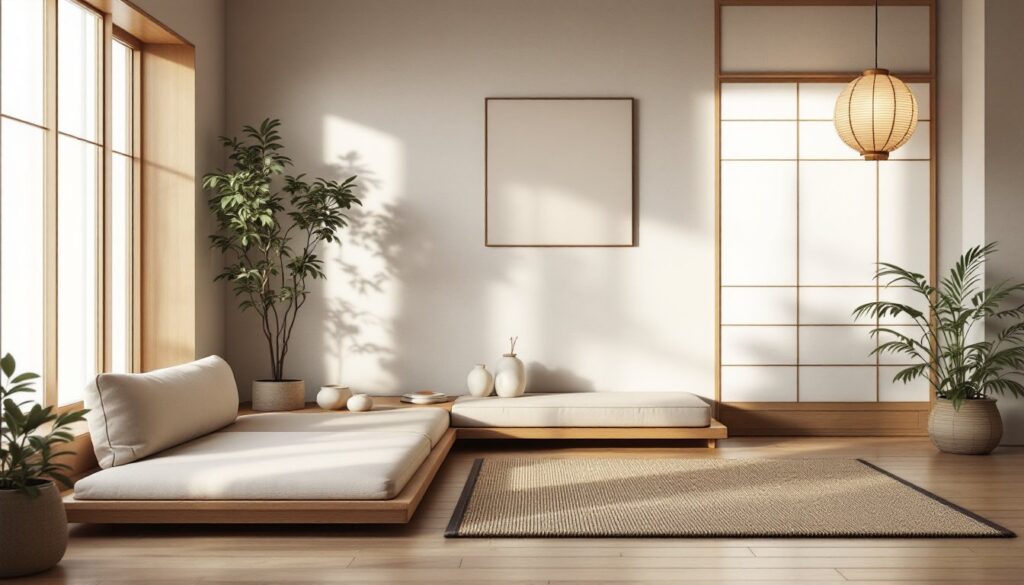
Shoji screens, low wooden frames with translucent paper panels, introduce subtle light diffusion and soft room division. While traditional shoji requires some carpentry skill, modern interpretations use store-bought panels that lean against walls or fit into simple track systems, a practical compromise for most DIYers.
Color palettes draw from nature: warm grays, soft whites, charcoal, warm earth tones, and accents of moss green or indigo. These hues reduce visual noise and create a cohesive backdrop for functional furniture. Unlike maximalist décor that plays with bold contrasts, Japanese rooms let neutral tones do the heavy lifting.
Essential Japanese Living Room Furniture Pieces
Low Seating And Floor-Based Furniture
Tatami mats are the foundation of many Japanese interiors. These woven straw mats (traditionally 5.8 feet by 2.9 feet) define seating zones and add natural texture underfoot. They’re not load-bearing, just a surface layer that softens acoustics and introduces warmth. If a full tatami installation feels ambitious, a single mat or runner anchors a seating area without commitment.
Zaisu chairs (backless floor chairs with leg supports) offer genuine comfort for extended floor-level sitting. They’re ideal for smaller living rooms where standard chairs consume too much square footage. Look for models with removable cushions for easier cleaning. Most zaisu collapse flat for storage, though they do require good knee and ankle flexibility, keep that in mind if mobility is a concern for household members.
Low sofas and daybeds are workhorses in Japanese living rooms. These are typically 8 to 10 inches lower than Western couches and pair naturally with floor seating. A low platform bed (sometimes called a tatami frame) can serve double duty as a sofa during the day and sleeping surface at night, maximizing small footprints.
Floor cushions (zabuton) complement low seating and can be stacked when not in use. Linen covers in neutral tones are easier to launder than traditional silk or brocade.
Storage Solutions With Clean Lines
Tansu chests are traditional Japanese wooden cabinets with multiple drawers and a sturdy frame. Modern reproductions appear throughout home goods retailers and offer a beautiful alternative to shelving for hiding clutter. The benefit: drawers conceal contents entirely, maintaining the visual calm of your room.
Floor-to-ceiling shelving keeps storage visible but organized. Keep shelves sparse, leave at least 40% of shelf space empty. This restraint is harder to execute than filling every inch, but it transforms the aesthetic from cluttered to curated. Wooden shelves with simple brackets avoid the industrial edge of metal systems.
Credenzas and sideboards with clean, tapered legs create the illusion of lightness even though their function as storage powerhouses. Look for pieces with minimal hardware (simple wooden pulls rather than brass knobs) and flat surfaces, decorative feet and ornate edges contradict Japanese minimalism.
Built-in alcove cabinets (called toko when recessed) turn awkward corners or wall segments into functional display and storage zones. If your space permits and you’re comfortable with basic carpentry, installing a shallow cabinet above a console or behind a sofa maximizes vertical real estate. When in doubt, a simple wooden frame with sliding barn-door panels achieves the same effect with less precision required.
How To Style Your Space For Maximum Tranquility
Begin with honest assessment. Measure your living room, note natural light direction and intensity, and identify which areas feel cramped or empty. Japanese design amplifies these observations rather than fighting them, if your room is small, lean into intimacy instead of forcing an open-plan illusion.
Before purchasing anything, move existing furniture to test low-profile arrangements. The goal is visual sightlines: if you’re sitting on a low sofa, can you see across the room without obstruction? This open viewing corridor reduces the sensation of being hemmed in, even in compact spaces.
Material selection matters enormously. Natural wood with visible grain beats veneer or laminate for authenticity. Linen and cotton textiles age gracefully and feel substantial, avoid synthetic blends that cheapen the aesthetic. A home goods furniture approach considers how materials will patina and wear, embracing that change.
Introduce natural elements: river rocks in a shallow ceramic bowl, a single branch in a tall vase, or a living moss wall if humidity allows. These aren’t busy decorative statements, they’re quiet anchors that connect the interior to the natural world.
Lighting deserves its own planning phase. Harsh overhead fixtures contradict the whole philosophy. Install dimmable LED panels above or indirect wall sconces instead. Paper lanterns (both traditional and modern reproductions) diffuse light softly and reference Japanese paper craftsmanship without kitsch.
When sourcing pieces, modern design inspiration websites showcase high-end interpretations, but local vintage shops and international furniture retailers often stock affordable authentic pieces. Don’t feel obligated to match every single item, a mix of antique and new, high-end and budget-friendly, creates more authentic depth than a coordinated set.
Layout should follow the principle of asymmetrical balance. Avoid centering everything. A sofa placed slightly off-center with a console table, two low chairs, and a single large plant creates visual interest without the formal rigidity of symmetry. American home furniture often defaults to matched pairs and centered arrangements, resist that instinct.
Conclusion
Creating a Japanese-inspired living room doesn’t require extensive renovations or a designer’s budget. It requires intention: choosing fewer, better pieces: leaving breathing room: and trusting that emptiness is not absence but presence. Start small, one tatami mat, a single zaisu chair, or a clean-lined credenza, and observe how the space feels. Japanese design teaches patience, and your room will evolve as you refine what matters. The payoff is a living space that genuinely supports how you want to live, not how magazines say you should.