Table of Contents
ToggleA dining room isn’t just a place to eat, it’s where memories get made. Whether you’re hosting holiday gatherings or quiet weeknight dinners, custom dining room furniture transforms that space into a reflection of your personal style and lifestyle. Unlike off-the-shelf pieces, a custom kitchen table or bespoke seating arrangement fits your exact dimensions, taste, and budget. In 2026, more homeowners are ditching the cookie-cutter approach, working directly with craftspeople to build furniture that’s genuinely theirs. This guide walks you through the entire process of commissioning custom dining pieces, from the initial planning stage to bringing your vision to life.
Key Takeaways
- Custom dining room furniture fits your exact dimensions and style, solving space challenges that mass-produced sets can’t address while using superior joinery methods like mortise-and-tenon joints that last decades.
- Measure your dining room thoroughly before commissioning a piece, accounting for the 36-inch minimum clearance between the table edge and walls so chairs can move freely.
- Custom dining table costs range from $1,200–$2,500 for simple designs to over $5,000 for detailed heirloom pieces, with most craftspeople requiring 6–12 weeks lead time and a 25–50% upfront deposit.
- Choose hardwoods like walnut or oak for durability, consider finishes (polyurethane resists spills better than oil, matte hides fingerprints), and prioritize durability over aesthetics if your household includes children.
- Find a skilled craftsperson by searching locally, checking social media, requesting references, and reviewing past projects before getting all terms in writing, including design, materials, cost, timeline, and revision policies.
- Plan ahead for custom pieces as long-term investments that will bring you and your family decades of enjoyment in your home.
Why Custom Dining Furniture Matters for Your Home
Standard mass-produced dining sets come in preset sizes and styles that rarely fit perfectly. Your room might be an awkward L-shape, or you might need seating for eight that still leaves enough floor space to move. Custom pieces solve these problems.
When you commission a custom dining room table, you’re investing in durability and fit. A craftsperson can build to your exact specifications, using joinery like mortise-and-tenon joints or dovetail construction that outlasts particleboard joints by decades. A custom kitchen table can also match your home’s architectural style or color palette in ways stock furniture can’t.
Beyond practicality, there’s the satisfaction factor. You know who built your table, what wood was used, and why certain design choices were made. That story matters when you’re sitting around it with family.
Key Considerations Before Commissioning Custom Pieces
Space Planning and Room Dimensions
Before contacting a craftsperson, measure everything. Get the length, width, and height of your dining room, noting where doors, windows, and existing fixtures sit. Account for clearance, you need roughly 36 inches minimum between the table edge and a wall or other furniture so people can push chairs in and out comfortably.
Consider traffic flow too. If your dining room is part of an open-concept kitchen, a long custom table might block movement. Sketch out your layout, including chair height and depth. A typical dining chair is 18 inches wide and needs about 12 inches of space from the table edge to the backrest.
Jot down any structural quirks, sloped ceilings, uneven floors, or built-in shelving. These affect both design and delivery. A craftsperson needs this intel upfront to avoid building something that won’t fit or function once it arrives.
Budget and Timeline Expectations
Custom furniture costs more than IKEA, but the price range is wider than you’d think. A simple reclaimed wood table might run $1,200–$2,500, while a hand-finished heirloom piece with complex joinery could exceed $5,000. Materials, size, detail, and the craftsperson’s location all affect pricing. Ask for a detailed quote that breaks down materials, labor, and finishing costs.
Timeline matters too. Most craftspeople have a lead time of 6–12 weeks depending on their workload and the complexity of your design. Rush orders are possible but typically cost 20–30% more. If you’re planning a specific date, a holiday dinner, anniversary, or milestone gathering, communicate that early. Better yet, plan ahead and give your maker breathing room to do the job right.
Materials and Design Styles to Explore
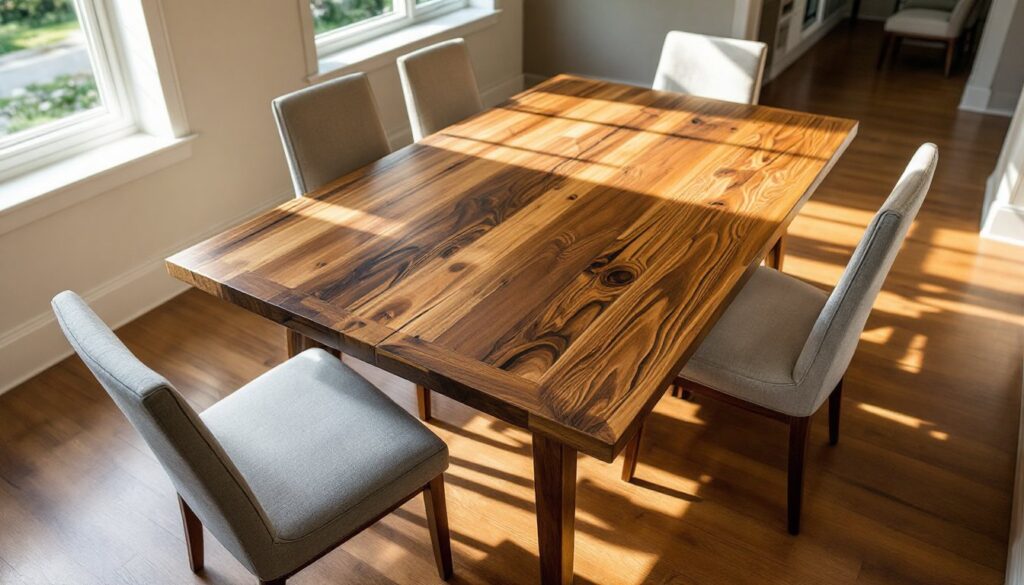
Wood is the most common choice for custom dining tables, and options abound. Hardwoods like walnut, oak, cherry, and maple are durable and take stain or finish beautifully. Softer woods like pine or poplar cost less but dent more easily. Reclaimed wood adds character and environmental credibility, though costs vary based on source and age.
Finish matters as much as the wood itself. A polyurethane topcoat resists spills and scratches better than oil, while an oil finish showcases wood grain at the cost of more maintenance. Matte finishes hide fingerprints: gloss finishes show them. Ask your craftsperson which finish suits your lifestyle, if kids are eating at this table, durability wins over aesthetics.
For seating, think about upholstery and frame durability. Hardwood frames are sturdier than engineered wood. Leather cleans easily but ages visibly: fabric can stain but feels warmer. Mixed materials, like a wood frame with metal legs, offer modern appeal.
Design styles range from farmhouse (chunky bases, turned legs, natural finishes) to mid-century modern (sleek lines, tapered legs, minimalist design) to industrial (metal and reclaimed wood). Gallery-style edges, pedestal bases, and trestle designs all affect both appearance and how many people can sit comfortably. Discuss inspiration photos with your designer, show what you love, and let the craftsperson adapt it to your space and budget.
Working With Craftspeople and Designers
Finding the right maker is half the battle. Search locally first, check Instagram hashtags like #customfurniture or #woodworkerforhire, or ask interior designers for referrals. The Handyman’s Daughter and Ana White both feature talented makers and offer foundational knowledge if you’re considering a DIY route.
When vetting a craftsperson, ask to see finished pieces in similar styles. Check reviews and ask for references, a quick call to past clients reveals a lot about reliability and communication. Discuss their design process. Do they create a 3D rendering? Do they adjust based on feedback? Will they build a small prototype or sample before committing to the full piece?
Get everything in writing: the design, materials, dimensions, finish, cost, timeline, and payment schedule. Most makers request a deposit (typically 25–50%) upfront, with the balance due before delivery or shortly after. Clarify what happens if you hate the finished product, some craftspeople offer a small revision window: others don’t. Understanding expectations prevents ugly surprises.
If you’re tackling this yourself, free plans are available at sites like Fix This Build That, though custom sizing means adapting existing designs. You’ll need a miter saw, circular saw, clamps, sandpaper, and finishing supplies. Wood acclimation, letting boards adjust to your home’s humidity for a week or two, is essential to prevent warping or cracking after you build.
Conclusion
A custom dining table and seating aren’t impulse purchases, they’re long-term investments in your home’s function and character. Taking time to measure, plan your budget, explore materials, and find a skilled craftsperson ensures you end up with pieces you’ll love for decades. Your dining room is waiting for its moment to shine.