Table of Contents
ToggleArranging living room furniture isn’t about following a rulebook, it’s about understanding how your family actually uses the space. A well-arranged living room balances aesthetics with practicality: you need clear pathways, comfortable seating, and a room that feels inviting rather than cramped. Whether you’re working with a 200-square-foot apartment or a sprawling suburban den, the principles remain the same. This guide walks you through the decision-making process, from measuring your room to testing layouts before you commit. You’ll learn how to identify focal points, create functional zones, and select pieces that work together instead of fighting for attention.
Key Takeaways
- Measure your room and map traffic flow before arranging living room furniture to ensure clear 18-inch pathways and a functional layout that prevents awkward cramping.
- Identify a focal point—such as a TV, fireplace, or window—and position primary seating to face it, creating visual order and intentional conversation areas.
- Select furniture pieces scaled appropriately to your space, check doorway and ceiling clearance, and choose multi-functional items like ottomans and console tables.
- Create balanced zones for different activities, such as a main seating area for viewing and a reading nook, to maximize functionality and add visual interest.
- Test your layout for several days by actually using the space—sitting on furniture, checking sightlines, and observing natural light—before finalizing placement.
Define Your Room’s Layout and Traffic Flow
Before you move a single piece of furniture, grab a tape measure and sketch your room. Measure the length, width, and height. Note window locations, doors, and any architectural features like built-in shelves or fireplaces. This isn’t busywork, it’s the foundation of every good layout.
Next, identify the natural traffic pattern. Where do people walk when they enter? Do they head straight to the kitchen? Toward a hallway? Watch how your household actually moves through the space for a few days. The primary traffic flow is often a diagonal line from the main entry to the farthest door or window.
Your furniture should never block these pathways. A common mistake is pushing everything against the walls to make the room feel bigger, it actually makes it feel smaller and awkward. Instead, leave at least 18 inches of clear walkway, and don’t place low-traffic blocking elements in direct sight lines. If your room is narrow, arrange pieces parallel to the longest wall rather than perpendicular to it.
Choose a Focal Point and Build Around It
Every living room needs an anchor, a focal point that draws the eye and organizes the space. The most common focal point is a television, but it doesn’t have to be. A fireplace, large window with a view, or even an accent wall can serve the role just as well.
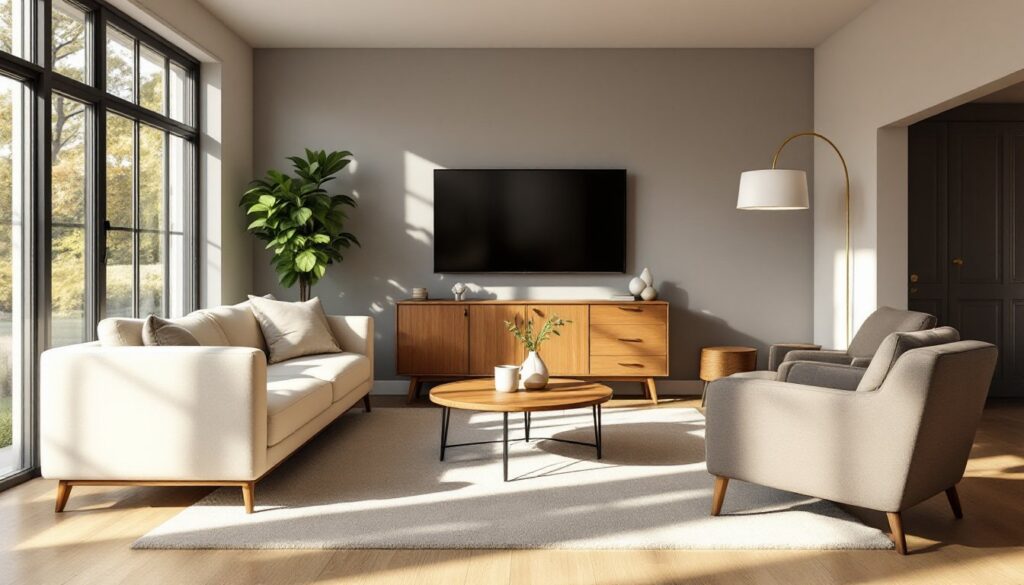
Once you’ve identified your focal point, position your primary seating to face it. If it’s a TV, viewers should sit 8 to 10 feet away for comfortable watching. If it’s a fireplace, arrange seating so people can enjoy the warmth and ambiance. If you have large windows with natural light or a view, orient seating to take advantage of that.
Building around a focal point creates visual order and ensures conversation areas feel intentional rather than scattered. It also prevents the room from feeling chaotic when you add additional pieces like side tables, accent chairs, or shelving. Your focal point becomes the gravitational center, everything else orbits around it with purpose.
Select the Right Furniture Pieces for Your Space
Furniture scale matters enormously. A sectional that fits beautifully in a showroom can swallow a small living room, while dainty chairs look lost in a spacious one. Before shopping, know your space’s dimensions and the function you need.
Measure doorways and hallways to confirm pieces will actually fit through them. Check ceiling heights if you’re considering tall bookcases or entertainment units. Many DIYers forget this step and end up with furniture that looks physically wrong in the space, even if it’s the right color and style.
Choose pieces that serve double duty when possible. An ottoman can function as a footrest, side table, or extra seating. A console table adds visual interest behind a sofa and provides storage. Furniture with exposed legs creates a lighter visual weight than pieces that sit directly on the floor, this is especially valuable in smaller rooms. When selecting pieces, think about your lifestyle: families with young kids need durable fabrics and easy-to-clean surfaces, while a household of two might prioritize luxury and aesthetics over practicality.
Create Balanced Zones for Different Activities
Seating and Entertainment Area
Your primary seating zone should include comfortable pieces arranged for conversation or viewing. A sofa facing the focal point is standard, but consider adding a pair of armchairs angled slightly inward to create a more intimate grouping. This layout encourages dialogue and makes the space feel designed rather than accidental.
Add a coffee table or ottoman in the center to anchor the group. Allow at least 12 to 18 inches between the sofa and table for leg room. Side tables flanking the seating area give people places for drinks, remotes, and lamps. This zone should feel complete on its own, if someone wants to sit and watch TV or chat, they have everything they need within arm’s reach.
Reading or Accent Nook
If space allows, a reading nook or accent seating area adds functionality and visual interest. Position a comfortable chair near a window for natural light, pair it with a small side table and floor lamp, and you’ve created a secondary zone without clutter. This works equally well in a corner of a large room or as part of a smaller living room’s layout.
An accent nook also breaks up the monotony of identical seating and signals to guests that different activities are welcome. It’s where someone might curl up with a book while others watch TV across the room, all in the same space, comfortably separated by arrangement and furniture choices. This separation is achieved through home goods furniture selection and thoughtful placement rather than walls or dividers.
Arrange and Test Before Finalizing
Before committing to a layout, test it. Move furniture into position and live with it for at least a few days. Walk the traffic patterns you identified earlier. Sit on the seuch and watch TV. Eat a meal from the coffee table. Notice where natural light falls throughout the day and whether lamps light the space effectively at night.
Pay attention to sightlines. Can someone in the reading nook see the TV? Does glare hit the screen from windows? Are there dead zones where furniture blocks conversation? These small friction points reveal themselves quickly when you’re actually using the space.
Don’t hesitate to adjust. Professional designers move furniture multiple times before finalizing a layout. Use furniture sliders or ask a friend to help shift pieces around. Your home furniture arrangement should support how you live, not force you into an uncomfortable routine.
Once you’re satisfied with placement, take photos from multiple angles and make notes about what works. If you’re shopping for additional pieces or planning future changes, these reference points help you make decisions that maintain flow and balance. A room that functions well today will adapt better to tomorrow’s needs when the foundational layout is solid. Design professionals at MyDomaine and Dwell frequently emphasize that testing before finalizing prevents expensive mistakes and ensures your arrangement truly fits your lifestyle. If you’re sourcing new pieces, home furniture near me resources and American home furniture retailers often allow in-home trials or easy returns, giving you flexibility to refine your layout over time.