Table of Contents
ToggleArranging furniture in a living room isn’t just about fitting pieces into a space, it’s about creating a room that actually works for how you live. A well-thought-out furniture layout improves traffic flow, makes conversation easier, and makes the whole room feel intentional instead of cluttered. Whether you’re working with a spacious, light-filled room or a cozy nook, the principles of good furniture arrangement remain the same: measure accurately, respect your focal points, and organize spaces so each zone serves its purpose. This guide walks you through the practical steps to transform your living room into a functional, comfortable gathering space that you’ll actually want to spend time in.
Key Takeaways
- Measure your living room and furniture accurately before arranging—use graph paper or a room planner app to test layouts on paper and avoid costly trial-and-error mistakes.
- Design your furniture arrangement around a clear focal point, whether it’s a fireplace, TV, window, or accent wall, to create intention and visual harmony in the room.
- Create functional zones by establishing an entertainment seating area and secondary conversation spaces, using rugs to anchor each zone and maintain 18+ inches of walking space throughout.
- Float furniture 12-18 inches from walls and arrange seating in rectangular or U-shaped groupings with 6-8 feet between pieces to promote conversation and connection.
- Balance visual weight by mixing furniture heights and sizes—match your sofa scale to your room and repeat materials and colors across zones for a cohesive, intentional living room design.
Assess Your Space and Measure Everything
Before you move a single piece of furniture, grab a tape measure and a notepad. Measure the length and width of your living room in feet, and jot down the exact dimensions. Next, measure every doorway, window, closet opening, and architectural feature, these are your fixed constraints that no amount of rearranging will change.
Then measure your furniture. Don’t estimate: write down the width, depth, and height of your sofa, chairs, coffee table, TV stand, and any other major pieces. Many DIYers skip this step and end up shoving a sectional into a space that’s two feet too tight, creating traffic jams and wasted square footage.
Draw a to-scale floor plan on graph paper or use a free app like The Spruce‘s room planner. At ¼-inch scale (each ¼-inch represents 1 foot), sketch your room’s perimeter, walls, doors, and windows. Cut out scaled shapes for your furniture and move them around on paper first. This takes fifteen minutes and saves you from hauling a 200-pound sectional three times.
Identify Your Focal Point and Design Around It
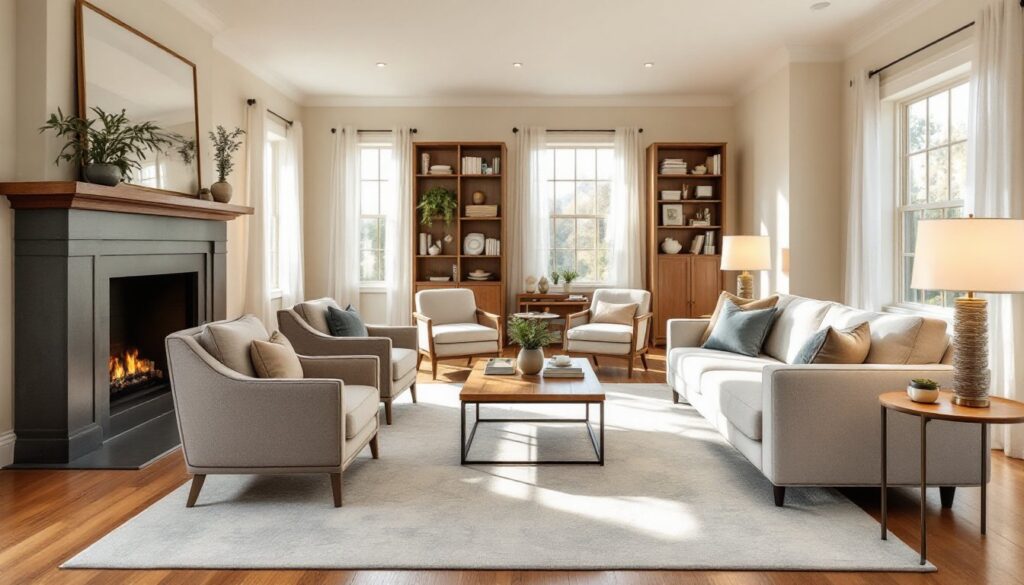
Every room has a natural focal point, usually the fireplace, a view window, or the TV. Your furniture arrangement should face and complement this feature, not fight against it. If your living room has a fireplace, arrange your primary seating so people face it. If the TV is your focal point, place the sofa across from it at a comfortable viewing distance, typically 8 to 10 feet for a standard 55-inch screen.
Be honest about which feature actually draws the eye when you enter the room. Sometimes that’s the window with natural light: sometimes it’s the accent wall you just painted. Once you’ve identified it, angle major pieces toward it. This creates a sense of intention and makes the room feel curated rather than randomly furnished.
If your space lacks a natural focal point, you can create one. A large piece of art, a statement rug, or an accent wall behind your sofa can anchor the layout. Home Furniture: Transform Your explores options for making pieces work together cohesively.
Create Functional Zones for Different Activities
Entertainment and Seating Zone
This is typically your largest zone. Your sofa, TV stand, and primary seating face your focal point and form a semi-enclosed area. A good rule: leave at least 18 inches of walking space behind furniture so people can move through without squeezing past the back of a couch.
The entertainment zone shouldn’t consume the entire room. If your living room is 12 by 16 feet, use roughly the front two-thirds for seating, leaving the back third for circulation or secondary activities. Use a 6-by-9-foot or 8-by-10-foot rug to anchor the seating area and visually define the zone. The rug should pull the grouping together without feeling like a separate island in the room.
Conversation and Gathering Area
If you have space beyond your main seating zone, create a secondary conversation area. Two chairs angled toward each other across a side table, or a pair of loveseats facing a coffee table, invites smaller group interaction. This zone should be visually connected to, but distinct from, the entertainment area.
Keep conversation zones intimate. A pair of chairs 6 to 8 feet apart allows comfortable conversation without shouting. If chairs are too far apart, you’ve created a dead zone, not a gathering spot. Ensure each secondary area has a small table for drinks and remotes, and consider a separate rug if the space is large enough to justify it. MyDomaine offers detailed inspiration for layering different activity zones in larger rooms.
Arrange Seating for Comfort and Connection
Your sofa is the anchor. Position it to face your focal point, but don’t push it flat against the wall unless your room is very tight, floating furniture (pulling it 12 to 18 inches from the wall) creates depth and makes the room feel larger and more intentional.
Arrange accent chairs at a 45-degree angle to the sofa or facing it directly, depending on room size and your layout. Aim for a roughly rectangular or U-shaped conversation layout rather than a scattered arrangement. If your sofa is 8 feet long, pair it with chairs placed so that armrest-to-armrest distance is about 6 to 8 feet. This creates an intimate grouping without making people lean forward to hear one another.
Place a coffee table 14 to 18 inches in front of the sofa, close enough to be functional, far enough that you won’t stub your toe walking around it. If you have two sofas facing each other, the coffee table sits between them. For sectional sofas, a coffee table works in front of the main seat, or you can skip it for a more relaxed layout with a side table instead.
Consider traffic flow. The path from your entry to other rooms shouldn’t cut through the middle of your seating zone. If it does, move furniture or accept that foot traffic will disrupt the space. Sometimes you can’t win: in that case, use a console table or a tall plant to suggest the boundary without fully blocking the path. 10 furniture arrangement ideas with pictures from HGTV shows practical layouts that respect natural traffic patterns.
Balance and Proportion for Visual Harmony
Visual balance doesn’t mean symmetry. A room with matching sofas on each wall feels formal: a room with varied seating heights and sizes feels more lived-in. The key is that the room doesn’t look lopsided.
Match furniture scale to your room. A heavy, oversized sectional in a small 10-by-12-foot living room will overwhelm the space: a delicate loveseat and two chairs will make it feel empty. As a rough guide, your sofa should take up roughly one-third of your room’s wall space, leaving room to breathe around it.
Use height and visual weight to create balance. If your sofa is low and streamlined, balance it with a tall bookcase, a statement mirror, or vertical artwork on the opposite wall. A dark, heavy leather sectional feels less bulky when paired with airy, light-colored accent chairs.
Repeat materials and colors in different zones to tie the arrangement together. If your main seating uses a neutral palette with wood tones, echo those in your secondary zone. The rug, throw pillows, and lighting fixtures should create a visual conversation across the room, making separate zones feel cohesive. This prevents the layout from feeling like random furniture dropped in a space rather than a thoughtful arrangement.