Table of Contents
ToggleArranging bedroom furniture might seem straightforward, throw the bed against the wall, add a nightstand, call it done. But that approach leaves a lot of comfort and functionality on the table. A well-planned bedroom layout transforms the space into a sanctuary that actually works for how you live, sleep, and move through the room. Whether you’re starting from scratch or rearranging an existing setup, understanding the fundamentals of furniture placement makes all the difference. This guide walks through the practical decisions that turn a bedroom into a room that feels both inviting and livable.
Key Takeaways
- Measure your room’s dimensions, doorways, windows, and permanent fixtures before arranging bedroom furniture—this foundation prevents costly mistakes and ensures proper traffic flow.
- Position your bed as the room’s anchor against a long wall opposite the door for maximum floor space and visual balance, while maintaining 12–18 inches clearance from the wall for practical access.
- Place nightstands at mattress height on both sides of the bed when possible, and use wall-mounted shelves or floating shelves as space-efficient alternatives in tight layouts.
- Create distinct zones for sleeping, working, and movement by using strategic furniture placement, rugs, and lighting rather than cramming all pieces into one area.
- Prioritize a clear 24–30 inch pathway from your door to the bed and closet to ensure safe, comfortable daily movement through the bedroom.
- Choose vertical storage solutions like wall shelves and under-bed drawers to keep floors open and make your bedroom feel larger and more functional.
Assess Your Room Layout And Dimensions
Before moving a single piece of furniture, grab a measuring tape and document your room’s actual dimensions. Include the length, width, and ceiling height. Note where doors swing open, window placement, and any permanent fixtures like radiators, outlets, or built-in shelves.
Sketch a rough floor plan to scale, even graph paper or a simple phone app works. Mark architectural features, not just the perimeter. A door that swings inward eats floor space, and a window with a deep sill might affect nightstand placement. Some bedrooms have angled ceilings, closet configurations, or heating vents that constrain furniture positioning.
Measure your largest pieces: bed frame (including the footboard), dresser, and any other major items you plan to keep. Know the exact dimensions, not just what the tag says, but what you’ll actually place in the room. Account for nightstands, too: a standard 24-inch-wide nightstand assumes 12 inches of overhang on each side of the bed.
Consider traffic flow. Most bedrooms need a clear path from the door to the bed and closet without zigzagging around furniture. If the room feels cramped at 5 feet wide, you’re either fighting layout or furniture that’s too large for the space. Be honest about that now.
Plan Your Bed Placement As The Room Anchor
The bed is the biggest, most visually dominant piece in any bedroom, so it anchors everything else. Its placement dictates traffic patterns, wall usage, and the overall sense of proportion.
Positioning For Flow And Visual Balance
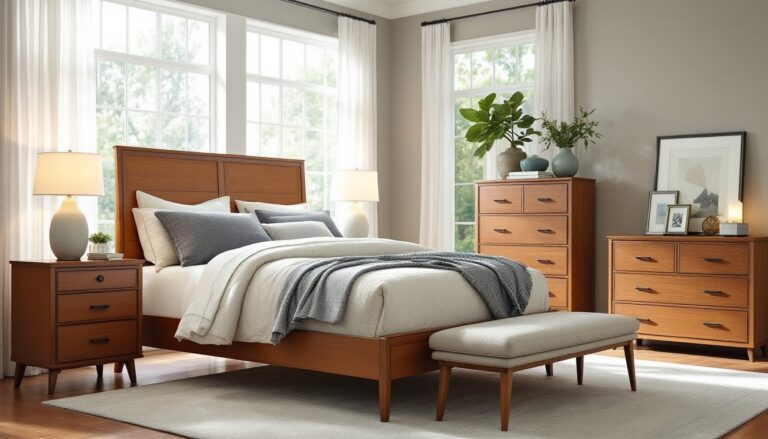
The most common and practical placement puts the bed against a long wall, ideally opposite the door or at an angle if the room layout demands it. This arrangement maximizes floor space and makes the room feel less boxed in. If your bedroom is long and narrow, centering the bed, with nightstands flanking both sides, can feel more balanced than pushing it to one wall, though this requires more square footage.
Avoid placing the bed directly in front of a window unless you have no alternative. Windows need breathing room for airflow and cleaning, plus curtains or blinds can drape awkwardly over a headboard. If your window is the only sensible backdrop, consider a bed with a low footboard to keep sightlines open and let natural light reach the room.
Headboard placement matters for both function and aesthetics. Mounting the headboard directly to the wall is standard and saves space compared to a bed frame with a built-in headboard. If there’s no headboard, the bed alone against a wall works fine, just ensure proper clearance of 12–18 inches from the wall for making the bed and cleaning behind it. Professional bedroom design advice
Consider the room’s focal point. In a windowless wall, the bed is often the visual anchor: in a room with a strong architectural feature or a fireplace, the bed placement should complement rather than compete with it. Symmetry, nightstands on both sides of the bed, reinforces balance and feels intentional, even in small spaces.
Arrange Supporting Furniture For Functionality
With the bed placed, supporting pieces follow logically. Think of nightstands, dressers, and storage as functional partners to your bed, not afterthoughts scattered wherever there’s space.
Nightstands, Dressers, And Storage Optimization
Nightstands should flank the bed if there’s room, they’re practical (lamp, alarm clock, water glass) and visually balanced. A standard nightstand is 24 to 28 inches wide, 16 to 20 inches deep, and 24 to 28 inches tall. If space is tight, a narrow 16-inch console or even a wall-mounted shelf works. The key is that the tabletop is roughly level with the mattress for reaching a lamp or phone without awkwardness.
If both sides of the bed don’t have wall space, place one nightstand where you sleep most often and use wall-mounted shelves or a floating shelf on the other side. This isn’t failure, it’s smart use of available space. Many bedrooms aren’t symmetrical, and forcing symmetry just blocks doorways or sight lines.
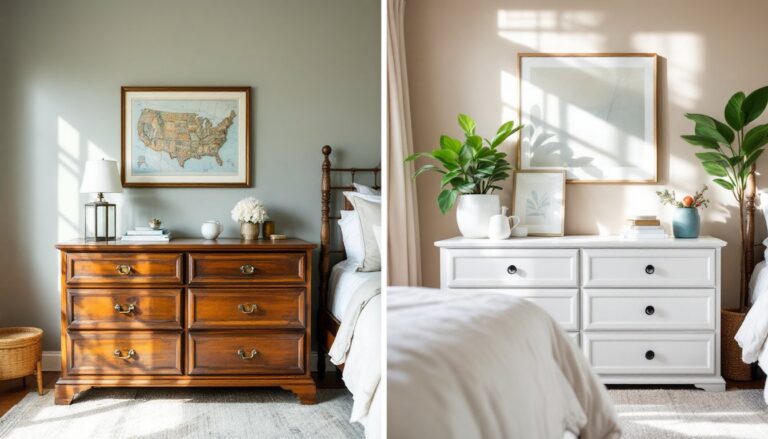
Dressers are usually placed on the wall opposite the bed (if space allows) or perpendicular to it. A standard dresser is 30 to 36 inches wide, though dimensions vary widely. The goal is visual balance without blocking windows or making the room feel sectioned off. A tall dresser with a mirror (a chest on chest or dresser with hutch) adds depth and creates a secondary focal point without taking additional floor space.
Storage pieces, closet shelves, under-bed drawers, wall shelving, should work with the layout, not against it. Pull-out under-bed storage is invaluable in small rooms, but only if you can access it without shoving the bed aside each time. Interior design guides often Wall-mounted shelves above a dresser or desk are practical and keep the floor open for movement.
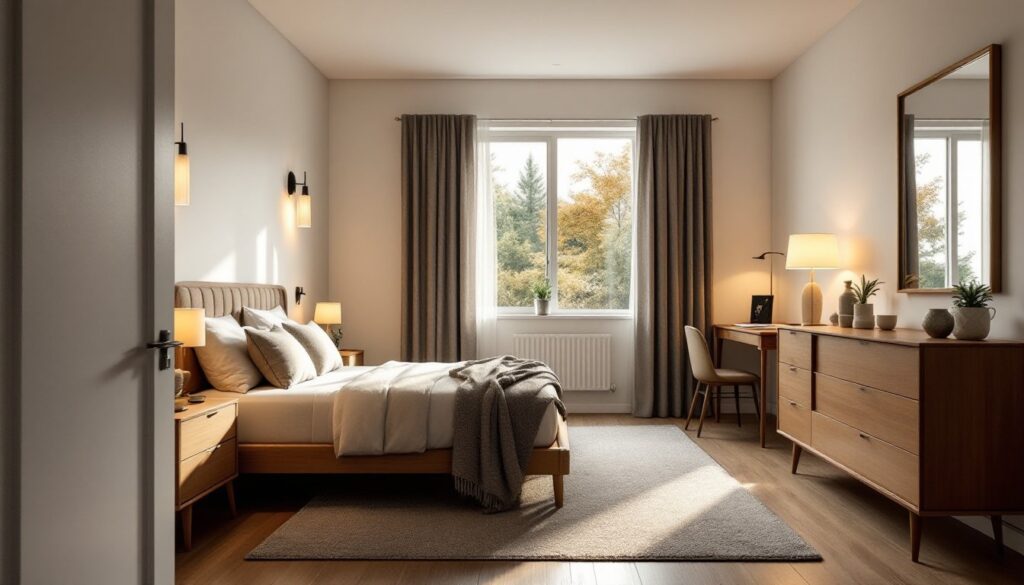
If your bedroom doubles as a workspace, position a desk perpendicular to the bed and away from the main sleeping area, if possible. Even 4 feet of separation helps the space feel like two zones rather than a desk that happens to be in a bedroom.
Create Zones For Work, Rest, And Movement
Modern bedrooms often serve double duty: sleeping, working, exercising, or unwinding. Zoning, using furniture placement and layout to suggest separate functions, makes the space feel intentional and less chaotic.
The sleeping zone is centered on the bed. Keep clutter minimal here: nightstands, maybe a small bench at the foot for folded clothes, but nothing that pulls attention away from rest. Soft, muted colors and soft furnishings (pillows, a quilt, a rug) reinforce this calm.
A work zone, if needed, lives perpendicular or at a corner. A small desk, 36 to 48 inches wide, positioned near a window or under a wall sconce, works without dominating the room. Keep it clear of bedroom items: a desk buried in laundry or books won’t feel productive. Task lighting is essential here, a good desk lamp prevents eye strain and keeps ambient lighting in the rest of the room gentle.
Movement zones are the forgotten hero. Ensure there’s a clear path at least 24 to 30 inches wide from the door to the bed, closet, and any other frequently accessed area. If furniture juts into the path, you’ll bump shins and trip at half-light. This isn’t decoration, it’s safety and daily functionality.
Rugs can delineate zones without walls. A rug under the bed and extending 24 inches on each side anchors the sleeping area. A separate rug under a desk or seating nook visually separates it. Rugs also add warmth underfoot, important since bedroom floors tend to be cold first thing in the morning. Small space design tactics
Lighting placement reinforces zones, too. Bedside lamps, a desk lamp, and ambient overhead or wall lighting let you adjust the room’s mood. Avoid a single central ceiling fixture: it flattens the room and forces harsh light on the sleeping area when you really just need to see the desk.
Conclusion
A thoughtfully arranged bedroom isn’t about following trends or magazine spreads, it’s about fitting furniture to your room, your routines, and your comfort. Start with honest measurements, anchor the layout around your bed, fill in supporting pieces with intention, and create zones that work for how you actually use the space. A bedroom that flows, feels open, and serves your needs beats a pretty photo every time.